


Adjusting the injection speed in ABS injection molding is a crucial process that significantly impacts the quality and efficiency of the final products. As an experienced ABS injection molding supplier, I've encountered various scenarios where proper injection speed adjustment was the key to achieving optimal results. In this blog, I'll share some insights on how to adjust the injection speed in ABS injection molding based on my practical experience.

Understanding the Basics of ABS Injection Molding
ABS, or Acrylonitrile Butadiene Styrene, is a widely used thermoplastic polymer known for its excellent mechanical properties, impact resistance, and aesthetic appeal. In injection molding, ABS pellets are heated until they melt and then injected into a mold cavity under high pressure. The injection speed refers to the rate at which the molten ABS is forced into the mold.
The injection speed plays a vital role in determining the filling pattern, part quality, and cycle time. A too - slow injection speed may lead to incomplete filling, weld lines, and poor surface finish. On the other hand, an excessively high injection speed can cause flash, air traps, and even damage to the mold.
Factors Affecting Injection Speed
1. Part Geometry
The shape and size of the part being molded are significant factors in determining the appropriate injection speed. Complex geometries with thin walls or long flow paths require higher injection speeds to ensure complete filling. For example, when molding ABS Plastic Bicycle Accessories, which often have intricate designs and thin sections, a relatively high injection speed may be necessary to fill all the cavities before the material solidifies.
Conversely, parts with thick walls or large cross - sections can tolerate lower injection speeds. This is because the thicker sections take longer to cool, providing more time for the material to flow and fill the mold.
2. Mold Design
The design of the mold, including the gate size, runner system, and venting, also affects the injection speed. A well - designed gate allows the molten ABS to enter the mold smoothly. If the gate is too small, a higher injection speed may be required to overcome the resistance. However, this can increase the shear stress on the material, potentially leading to degradation.
The runner system should be designed to minimize pressure drops and ensure uniform flow. Proper venting is essential to allow air to escape from the mold cavity during the injection process. Insufficient venting can cause air traps, which may require adjusting the injection speed to prevent defects.
3. Material Properties
The properties of the ABS material, such as its melt flow index (MFI), viscosity, and thermal stability, influence the injection speed. Materials with a higher MFI have a lower viscosity and can flow more easily, allowing for lower injection speeds. Conversely, materials with a lower MFI require higher injection speeds to fill the mold.
Thermal stability is also important. If the injection speed is too high, the shear heat generated during the injection process can cause the ABS material to degrade, resulting in poor part quality.
Methods for Adjusting Injection Speed
1. Step - by - Step Adjustment
One of the most common methods for adjusting the injection speed is the step - by - step approach. Start with a relatively low injection speed and gradually increase it in small increments. After each adjustment, inspect the molded parts for defects such as incomplete filling, flash, or air traps.
For example, if you notice that the part has incomplete filling, increase the injection speed slightly and run another test. Continue this process until the desired part quality is achieved. This method allows you to fine - tune the injection speed based on the actual performance of the molding process.
2. Using Mold Flow Analysis
Mold flow analysis is a powerful tool that can help predict the filling behavior of the molten ABS in the mold. By inputting the part geometry, mold design, and material properties into a mold flow simulation software, you can obtain detailed information about the flow pattern, pressure distribution, and temperature profile during the injection process.
Based on the simulation results, you can determine the optimal injection speed range. This method is particularly useful for complex parts or when dealing with new mold designs. It can save time and reduce the number of trial - and - error adjustments.
3. Monitoring Process Parameters
During the injection molding process, it's essential to monitor various process parameters, such as pressure, temperature, and injection time. These parameters are closely related to the injection speed. For example, an increase in injection speed usually leads to an increase in injection pressure.
By monitoring these parameters, you can detect any abnormal changes and adjust the injection speed accordingly. For instance, if the injection pressure suddenly spikes, it may indicate that the injection speed is too high, and you need to reduce it to prevent damage to the mold or the machine.
Case Studies
1. ABS Plastic Motorcycle Accessories
When molding ABS Plastic Motorcycle Accessories, we encountered a problem with incomplete filling in some of the thin - walled sections. Initially, we started with a relatively low injection speed, but the parts were not filling properly.
We then increased the injection speed in small steps and monitored the parts for defects. After several adjustments, we found that a slightly higher injection speed was required to ensure complete filling of the thin - walled sections. By using the step - by - step adjustment method, we were able to achieve high - quality molded parts with no visible defects.
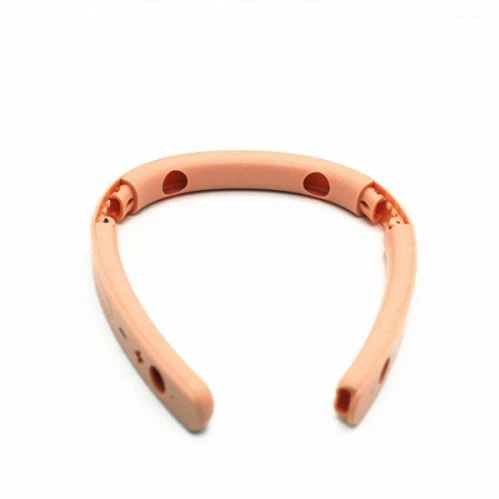
2. ABS Plastic Massager Accessories
In the production of ABS Plastic Massager Accessories, the parts had a complex geometry with multiple cavities. We used mold flow analysis to predict the filling behavior and determine the optimal injection speed range.
The simulation results showed that a specific injection speed was required to ensure uniform filling of all the cavities. By following the recommended injection speed from the mold flow analysis, we were able to produce high - quality parts with consistent dimensions and excellent surface finish.
Conclusion
Adjusting the injection speed in ABS injection molding is a complex but essential process that requires careful consideration of various factors, including part geometry, mold design, and material properties. By using methods such as step - by - step adjustment, mold flow analysis, and monitoring process parameters, you can optimize the injection speed and achieve high - quality molded parts.
As an ABS injection molding supplier, we are committed to providing our customers with the best - quality products. If you are interested in our ABS Plastic Bicycle Accessories, ABS Plastic Motorcycle Accessories, or ABS Plastic Massager Accessories, please feel free to contact us for procurement and further discussions. We look forward to working with you to meet your specific requirements.
References
- "Injection Molding Handbook" by O. John Inderhees
- "Plastics Materials and Processing" by James F. Carley
- Technical literature from ABS material suppliers


