


In the field of modern manufacturing, aluminum CNC machining has emerged as a pivotal process, renowned for its precision and efficiency in shaping various aluminum components. As an experienced aluminum CNC machining supplier, I have witnessed firsthand the intricate dance between cutting tools and aluminum workpieces, a process that hinges on a fundamental yet complex phenomenon: chip formation. Understanding the chip formation mechanism in aluminum CNC machining is not just a matter of academic interest; it directly impacts the quality of the machined parts, the efficiency of the machining process, and ultimately, the success of our business.
The Basics of Chip Formation in Aluminum CNC Machining
At its core, chip formation in aluminum CNC machining is the process by which the cutting tool removes material from the aluminum workpiece. This seemingly straightforward action involves a series of complex physical and mechanical interactions. When the cutting tool engages with the aluminum workpiece, it applies a force that causes the material to deform plastically. As the tool advances, the deformed material accumulates in front of the cutting edge until it reaches a point where it can no longer withstand the stress. At this moment, the material fractures and separates from the workpiece, forming a chip.
The process of chip formation can be broadly classified into three main types: continuous chips, segmented chips, and discontinuous chips. Each type is characterized by distinct morphological features and is influenced by a variety of factors, including the cutting conditions, the properties of the aluminum alloy, and the geometry of the cutting tool.

Continuous Chips
Continuous chips are the most common type of chips formed in aluminum CNC machining. They are characterized by a long, unbroken ribbon-like shape and are typically formed under conditions of high cutting speed, low feed rate, and sharp cutting tools. In the case of aluminum, its high ductility allows the material to deform continuously under the action of the cutting tool, resulting in the formation of continuous chips.
The formation of continuous chips is generally desirable in CNC machining as it indicates a stable cutting process. Continuous chips are less likely to cause tool wear and can be easily removed from the cutting zone, reducing the risk of chip jamming and improving the surface finish of the machined part. However, continuous chips can also pose challenges, especially when they become too long and wrap around the cutting tool or the workpiece. This can lead to increased cutting forces, poor surface quality, and even damage to the cutting tool.
Segmented Chips
Segmented chips are characterized by a series of regularly spaced cracks or segments along their length. They are typically formed under conditions of moderate cutting speed, medium feed rate, and when the cutting tool encounters variations in the material properties of the aluminum alloy. The formation of segmented chips is a result of the periodic fracture of the deformed material during the cutting process.
Segmented chips can have both positive and negative effects on the machining process. On the one hand, the segmented nature of the chips can help to reduce the cutting forces and improve the chip evacuation. On the other hand, the presence of cracks in the chips can lead to increased tool wear and a rougher surface finish on the machined part.
Discontinuous Chips
Discontinuous chips are characterized by their irregular shape and are typically formed under conditions of low cutting speed, high feed rate, and when the aluminum alloy has low ductility or contains hard inclusions. The formation of discontinuous chips is a result of the sudden fracture of the material without significant plastic deformation.
Discontinuous chips are generally less desirable in CNC machining as they can cause significant fluctuations in the cutting forces, leading to poor surface quality, increased tool wear, and reduced machining efficiency. However, in some cases, such as when machining brittle aluminum alloys or when using interrupted cutting processes, the formation of discontinuous chips may be unavoidable.
Factors Affecting Chip Formation in Aluminum CNC Machining
The type and morphology of the chips formed in aluminum CNC machining are influenced by a multitude of factors, including the cutting conditions, the properties of the aluminum alloy, and the geometry of the cutting tool. Understanding these factors is crucial for optimizing the machining process and achieving the desired chip formation characteristics.
Cutting Conditions
The cutting conditions, including the cutting speed, feed rate, and depth of cut, have a significant impact on chip formation. Generally, increasing the cutting speed tends to promote the formation of continuous chips, while increasing the feed rate and depth of cut can lead to the formation of segmented or discontinuous chips.
For example, when machining aluminum alloys, a high cutting speed can reduce the cutting forces and increase the temperature in the cutting zone, which enhances the ductility of the material and promotes the formation of continuous chips. On the other hand, a high feed rate can increase the stress on the material, leading to the formation of segmented or discontinuous chips.
Properties of the Aluminum Alloy
The properties of the aluminum alloy, such as its composition, hardness, and ductility, also play a crucial role in chip formation. Different aluminum alloys have different mechanical properties, which can affect the way they deform and fracture during the cutting process.
For instance, aluminum alloys with high silicon content tend to be more brittle and are more likely to form discontinuous chips. In contrast, aluminum alloys with high copper or magnesium content are generally more ductile and are more likely to form continuous chips. Additionally, the hardness of the aluminum alloy can also influence chip formation, with harder alloys requiring higher cutting forces and being more prone to the formation of segmented or discontinuous chips.
Geometry of the Cutting Tool
The geometry of the cutting tool, including the rake angle, clearance angle, and cutting edge radius, can significantly affect chip formation. The rake angle, in particular, has a profound impact on the cutting forces and the type of chips formed. A positive rake angle reduces the cutting forces and promotes the formation of continuous chips, while a negative rake angle increases the cutting forces and can lead to the formation of segmented or discontinuous chips.
The clearance angle of the cutting tool also plays an important role in chip formation. A sufficient clearance angle ensures that the chips can flow smoothly away from the cutting edge, reducing the risk of chip jamming and improving the surface finish of the machined part.
Importance of Understanding Chip Formation in Aluminum CNC Machining
As an aluminum CNC machining supplier, understanding the chip formation mechanism is of utmost importance for several reasons. Firstly, it allows us to optimize the machining process and improve the quality of the machined parts. By selecting the appropriate cutting conditions and cutting tools based on the desired chip formation characteristics, we can minimize tool wear, reduce cutting forces, and achieve a better surface finish on the machined parts.
Secondly, understanding chip formation helps us to troubleshoot machining problems and improve the efficiency of the machining process. For example, if we encounter problems such as chip jamming or poor surface quality, we can analyze the chip formation characteristics to identify the root cause of the problem and take appropriate corrective measures.
Finally, understanding chip formation is essential for ensuring the safety and reliability of the machining process. By controlling the chip formation, we can prevent the formation of long, continuous chips that can wrap around the cutting tool or the workpiece, which can pose a safety hazard and damage the machining equipment.
Applications of Aluminum CNC Machining and Chip Formation
Aluminum CNC machining is widely used in a variety of industries, including automotive, aerospace, electronics, and consumer goods. In each of these industries, the understanding of chip formation plays a crucial role in achieving the desired product quality and performance.
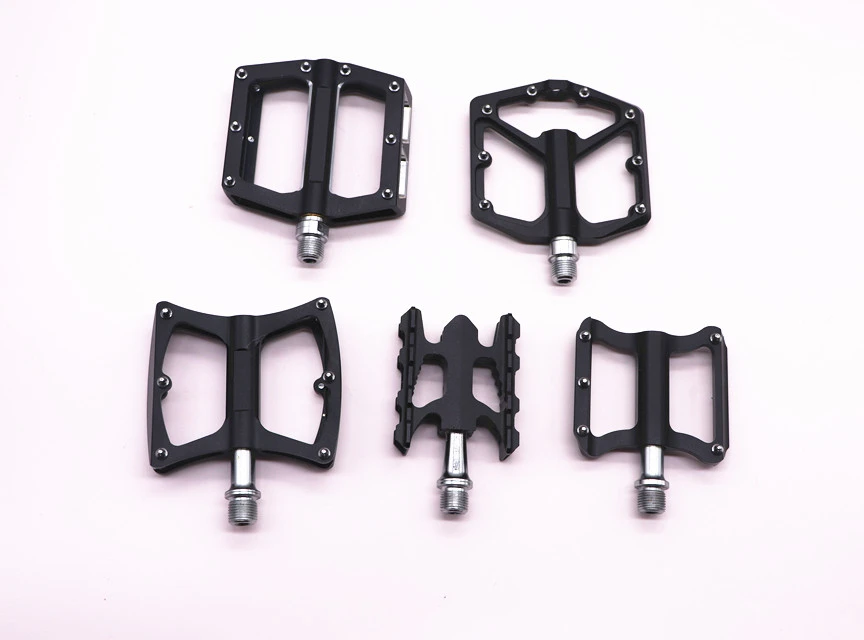
For example, in the automotive industry, aluminum CNC machining is used to manufacture various components, such as engine blocks, transmission cases, and CNC Aluminum Bicycle Pedal. By controlling the chip formation, we can ensure the dimensional accuracy and surface finish of these components, which are critical for their proper functioning and durability.
In the aerospace industry, aluminum alloys are widely used due to their high strength-to-weight ratio. The machining of aerospace components, such as aircraft wings and fuselage frames, requires high precision and strict quality control. Understanding the chip formation mechanism allows us to optimize the machining process and ensure the quality and reliability of these critical components.
In the electronics industry, aluminum CNC machining is used to manufacture components such as Aluminum Speaker enclosures and heat sinks. The quality of the machined parts directly affects the performance and aesthetics of the electronic products. By controlling the chip formation, we can achieve a smooth surface finish and precise dimensions, which are essential for the proper functioning and appearance of these components.
Conclusion
In conclusion, the chip formation mechanism in aluminum CNC machining is a complex yet fascinating phenomenon that has a profound impact on the quality, efficiency, and safety of the machining process. As an aluminum CNC machining supplier, it is our responsibility to understand the factors that influence chip formation and to optimize the machining process accordingly.
By selecting the appropriate cutting conditions, cutting tools, and aluminum alloys, we can achieve the desired chip formation characteristics and produce high-quality machined parts that meet the needs of our customers. Whether it is manufacturing 7075 Aluminum CNC Mill components for the aerospace industry or CNC Aluminum Bicycle Pedal for the automotive industry, our expertise in chip formation allows us to deliver superior products and services.
If you are in need of high-quality aluminum CNC machining services, we invite you to contact us for a consultation. Our team of experienced engineers and technicians is ready to work with you to understand your specific requirements and to provide customized solutions that meet your needs. Let us help you achieve your manufacturing goals with our advanced aluminum CNC machining capabilities.
References
- Astakhov, V. P. (2010). Metal Cutting Fundamentals. CRC Press.
- Trent, E. M., & Wright, P. K. (2000). Metal Cutting. Butterworth-Heinemann.
- Shaw, M. C. (2005). Metal Cutting Principles. Oxford University Press.


