


In the realm of plastic manufacturing, ABS injection molding stands out as a versatile and widely - used process. As an established ABS injection molding supplier, I've encountered numerous inquiries regarding the injection pressure for ABS injection molding. This blog aims to delve deep into this crucial aspect, offering insights based on years of hands - on experience and industry knowledge.
Understanding ABS and Injection Molding
ABS, or Acrylonitrile Butadiene Styrene, is a thermoplastic polymer renowned for its excellent mechanical properties, including high impact resistance, good dimensional stability, and ease of processing. Injection molding is a manufacturing process in which molten plastic is injected into a mold cavity under high pressure. The pressure plays a pivotal role in ensuring that the molten ABS fills the mold completely, takes on the desired shape, and cools to form a high - quality finished product.
Factors Affecting Injection Pressure for ABS Injection Molding
1. Part Geometry
The shape and size of the part being molded have a significant impact on the required injection pressure. Complex geometries with thin walls, long flow paths, or intricate details demand higher pressures. For instance, a part with thin walls requires more pressure to force the molten ABS to flow and fill the entire cavity before it cools and solidifies. On the other hand, a simple, thick - walled part may need relatively lower pressure. As an ABS injection molding supplier, we often analyze the part geometry carefully to determine the optimal injection pressure.
2. Mold Design
The design of the mold itself is another crucial factor. A well - designed mold with proper gate size, runner system, and venting can reduce the required injection pressure. For example, a larger gate allows the molten ABS to flow more easily into the mold cavity, reducing the resistance and thus the pressure needed. Additionally, effective venting in the mold helps to release air and gases, preventing air traps and ensuring smooth filling, which in turn can lower the injection pressure.
3. ABS Material Properties
Different grades of ABS have varying melt flow indices and viscosities. ABS materials with a higher melt flow index are more fluid and require less pressure to inject. Conversely, materials with a lower melt flow index are more viscous and need higher pressure to flow through the mold. As a supplier, we work closely with material manufacturers to select the most suitable ABS grade for each project, taking into account the required injection pressure and other performance criteria.
4. Processing Temperature
The temperature at which the ABS is melted and injected also affects the injection pressure. Higher processing temperatures generally reduce the viscosity of the ABS, making it easier to flow and thus requiring lower injection pressure. However, excessive temperatures can cause degradation of the ABS material, leading to poor part quality. Therefore, finding the right balance between temperature and pressure is essential.
Determining the Optimal Injection Pressure
Determining the optimal injection pressure for ABS injection molding is a complex process that requires a combination of theoretical knowledge and practical experience. Here are the steps we typically follow as an ABS injection molding supplier:
1. Initial Estimation
Based on the part geometry, mold design, ABS material properties, and processing temperature, we make an initial estimation of the injection pressure. We use industry - standard guidelines and formulas, as well as our past experience with similar projects.
2. Trial Runs
After the initial estimation, we conduct trial runs on our injection molding machines. During these trial runs, we carefully monitor the filling process, the quality of the molded parts, and the pressure readings. We make small adjustments to the injection pressure based on the results of each trial run.
3. Fine - Tuning
Once we have obtained satisfactory results from the trial runs, we fine - tune the injection pressure to ensure consistent part quality. We also consider other factors such as cycle time, energy consumption, and machine wear and tear during the fine - tuning process.
Typical Injection Pressure Ranges for ABS Injection Molding
In general, the injection pressure for ABS injection molding typically ranges from 70 to 150 MPa (10,000 to 22,000 psi). However, this range can vary significantly depending on the factors mentioned above. For simple, thick - walled parts, the pressure may be on the lower end of the range, while complex, thin - walled parts may require pressures closer to or even exceeding the upper end of the range.
Importance of Proper Injection Pressure
Maintaining the proper injection pressure is crucial for the success of ABS injection molding. If the pressure is too low, the molten ABS may not fill the mold completely, resulting in short - shots, incomplete parts, or poor surface finish. On the other hand, if the pressure is too high, it can cause excessive wear on the mold, increase the energy consumption, and even damage the injection molding machine. Moreover, high pressure can also lead to internal stresses in the molded parts, which may cause warping, cracking, or other quality issues over time.
Applications of ABS Injection Molding and Injection Pressure Considerations
ABS injection molding is widely used in various industries, and each application has its own specific injection pressure considerations.
1. ABS Plastic Massager Accessories
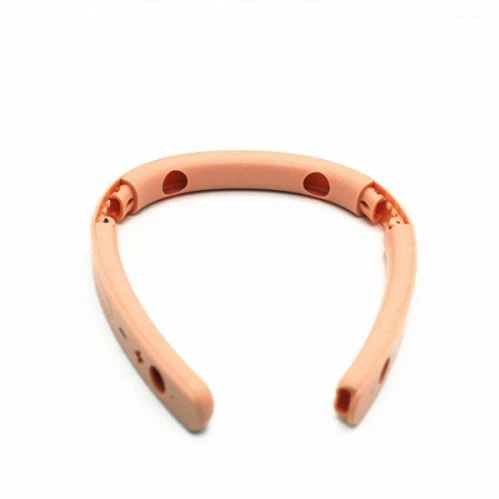
Massager accessories often require high - precision molding and smooth surface finishes. The injection pressure needs to be carefully controlled to ensure that the small details of the accessories are accurately replicated and that the surface is free of defects. Since these accessories are usually relatively small in size, the injection pressure may be adjusted accordingly based on the part geometry and material requirements.
2. ABS Plastic Bicycle Accessories
Bicycle accessories need to be strong and durable to withstand the rigors of cycling. The injection pressure for these parts is adjusted to ensure proper filling and consolidation of the ABS material, resulting in parts with high impact resistance and good mechanical properties. Additionally, factors such as the shape of the accessories, which may include thin walls or complex curves, also influence the injection pressure.
3. ABS Plastic Cars Accessories
Automotive accessories require high - quality molding to meet strict safety and aesthetic standards. The injection pressure for car accessories is carefully optimized to ensure uniform filling, dimensional accuracy, and excellent surface finish. Since these parts are often subject to high - volume production, maintaining consistent injection pressure is crucial for mass - producing high - quality parts.
Conclusion
In conclusion, the injection pressure for ABS injection molding is a critical parameter that depends on numerous factors, including part geometry, mold design, ABS material properties, processing temperature, and application requirements. As an experienced ABS injection molding supplier, we understand the importance of accurately determining and controlling the injection pressure to produce high - quality ABS parts.
If you are in the market for ABS injection - molded products, whether it's ABS Plastic Massager Accessories, ABS Plastic Bicycle Accessories, or ABS Plastic Cars Accessories, we are here to help. Our team of experts will work closely with you to understand your specific requirements and provide the best - in - class injection molding solutions. Contact us today to start the process of turning your ideas into reality.

References
- Throne, J. L. (1996). Thermoplastics Injection Molding: Materials, Processing, and Tooling. Marcel Dekker.
- Osswald, T. A., & Turng, L. - S. (2007). Injection Molding Handbook. Hanser Gardner Publications.
- Beaumont, J. P. (2003). Injection Molding Troubleshooting Handbook. Hanser Gardner Publications.


