

Zinc Alloy Die-Cast Decorative Accessories
Zinc alloy die-cast decorative accessories have become increasingly popular in various industries due to their excellent properties and aesthetic appeal. These accessories are widely used in furniture, automotive, electronics, and architectural applications, offering both functional and decorative benefits. This article provides an overview of zinc alloy die-cast decorative accessories, highlighting their features, advantages, and applications.
What is Zinc Alloy Die-Casting?
Zinc alloy die-casting is a manufacturing process that involves injecting molten zinc alloy into a mold under high pressure. The zinc alloy, typically composed of zinc combined with elements like aluminum, copper, and magnesium, solidifies quickly to form intricate and precise shapes. This process is known for its efficiency, accuracy, and ability to produce high-quality components with smooth surfaces.
Key Features of Zinc Alloy Die-Cast Accessories
High Precision and Detail
Zinc alloy die-casting allows for the creation of complex and detailed designs, making it ideal for decorative accessories that require fine patterns or intricate shapes.
01
Durability
Zinc alloys are highly durable and resistant to corrosion, ensuring that the decorative accessories maintain their appearance and functionality over time.
02
Lightweight
Despite their strength, zinc alloy accessories are relatively lightweight, making them easy to handle and install.
03
Smooth Surface Finish
The die-casting process produces components with a smooth and uniform surface, which can be easily polished, painted, or plated to enhance their aesthetic appeal.
04
Cost-Effective
Zinc alloy die-casting is a cost-effective manufacturing method, especially for large production runs, due to its high efficiency and minimal material waste.
05
Applications of Zinc Alloy Die-Cast Decorative Accessories
Furniture
Zinc alloy accessories are commonly used in furniture hardware, such as handles, knobs, hinges, and decorative trims. They add a touch of elegance and sophistication to furniture designs.
01
Automotive
In the automotive industry, zinc alloy die-cast components are used for decorative trims, emblems, and interior accents, enhancing the vehicle's overall appearance.
02
Electronics
Zinc alloy accessories are also found in consumer electronics, such as decorative bezels, buttons, and casings, providing both functionality and style.
03
Architectural
In architecture, zinc alloy die-cast accessories are used for decorative elements like door handles, window fittings, and ornamental features, contributing to the aesthetic appeal of buildings.
04
Zinc alloy die-cast decorative accessories offer a perfect blend of functionality, durability, and aesthetic appeal. Their versatility makes them suitable for a wide range of applications across various industries. Whether it's for furniture, automotive, electronics, or architectural purposes, zinc alloy die-cast accessories are a reliable and cost-effective choice for adding a touch of elegance and sophistication to any product or structure.
By leveraging the unique properties of zinc alloys, manufacturers can create high-quality decorative accessories that meet the demands of modern design and functionality.
Die Casting Common Problems And Solutions
To avoid hammer stuck, the following measures can be taken: First, regularly measure the temperature during production to ensure that the hammer and the sleeve are not overheated; second, select high-quality alloy materials and pay attention to the presence of impurities in the return material to prevent impurities from adhering to the hammer.
[Shot head stuck in gooseneck]
If you encounter this problem, first try to turn the hammer after the equipment cools down. If it cannot be turned, consider replacing the sleeve to remove the hammer. For a quick solution, you can also directly replace the material pot.
[Die casting machine is not feeding smoothly]
This situation is usually caused by blockage of the nozzle head or nozzle body. Observe whether the top of the nozzle lacks bright spots. If it is all gray cross-section, it means that the nozzle is blocked. Solutions include appropriately increasing the nozzle temperature, reducing the time to hit the nozzle, and fine-tuning the fixed mold cooling water.
[Thin-walled product cracking]
Analysis of possible causes and countermeasures are as follows: In terms of materials, the proportion of waste materials should be controlled to no more than 30%; mold design should ensure balanced ejection force, reasonable cooling water channels, and smooth filling flow; in terms of process parameters, attention should be paid to the reasonable setting of mold retention time and ejection delay.
[ADC14 material processing feedback hard and easy-to-wear tool]
To solve this problem, the material composition should be pure and free of hard impurities; at the same time, the gem blade designed for hard alloy is used, and its service life can reach about 7 days.
[Questions about black spots when polishing aluminum die castings]
This problem may involve multiple aspects such as material composition, mold design or process parameters, and specific analysis is required to determine the solution.
[Analysis of metal splashing phenomenon]
During the die casting process, metal splashing sometimes occurs, which may be caused by a variety of reasons. For example, the dynamic and fixed molds are not tightly closed, resulting in too large a gap; the clamping force is insufficient, and the metal cannot be effectively pressed; the dynamic and fixed molds of the die casting are not installed in parallel, affecting normal pressing; the span of the support plate is too large, and the injection force causes the sleeve plate to deform, resulting in spraying. For these problems, we can take corresponding debugging measures, such as reinstalling the mold, increasing the clamping force, adjusting the die-casting machine, adding support plates, etc., to solve the problem of metal splashing.
[Limitations of processing in aluminum die-casting holes]
Why can't the processing in the hole of aluminum die-casting exceed 0.25mm? This is because the silicon added to the aluminum alloy will form a silicon film on the surface when it condenses. The silicon film has extremely high hardness and excellent wear resistance. Some designers cleverly use this feature to design the inner surface of the die-casting hole as a bearing surface to increase its service life. However, since the thickness of this silicon film is usually only 0.2 to 0.9mm, over-processing will shorten the life of the bearing surface.
[Pattern problem after anodizing of die castings]
What are the possible reasons for the appearance of patterns after anodizing of die castings? On the one hand, the uneven distribution of spraying or injection oil may cause abnormal composition of the surface aluminum alloy or cold shut spots, which will form patterns after oxidation; on the other hand, inappropriate high-speed switching position may also lead to undercasting, which will show patterns after oxidation. In addition, the excessive copper ion content of the oxidation tank mentioned in the textbook may also cause pattern phenomenon, but this situation is relatively rare.
[Treatment of die-casting mold sticking]
When the die-casting mold has a sticking problem, we should first check whether the mold temperature is normal, and try to reduce the alloy liquid pouring temperature and mold temperature. This can reduce the sticking of the mold and extend the service life of the mold.
[Use of release agent and mold polishing]
When the die-casting mold has sticking, we need to check whether the ratio of the release agent is normal, and try to replace different types of release agents. At the same time, adjust the spraying position and polish the surface, but it should be noted that for molds that have been nitrided, be cautious when polishing to avoid damaging the nitrided layer and causing the problem of sticking more and more.
[Optimization of gating system]
In order to avoid the alloy liquid from continuously flushing the cavity wall or core, we can improve the design structure of the gating system. This helps to reduce the sticking phenomenon and extend the service life of the mold.
[Cooling system adjustment]
Modify the cooling system of the mold to ensure that it can effectively reduce the mold temperature, thereby reducing the occurrence of sticking.
[Adjustment of die casting process parameters]
During the die casting process, we can appropriately adjust the process parameters, such as reducing the injection speed and shortening the second speed stroke, to improve the sticking problem. These measures help optimize the die casting process and improve product quality.
Common materials and common production problems of die casting process
How To Improve Die Casting Quality
Key strategies to improve die casting quality include adjusting mold temperature, optimizing pressure control, reducing gas entrapment, etc. These measures can effectively improve the overall quality and production efficiency of the product.
Process Parameter Adjustment
Adjust die casting process parameters: Adjust key parameters such as filling speed, injection time and mold temperature according to production needs to achieve the best production effect.
Optimize pressure control: Ensure uniform filling of molten metal during die casting through precise pressure control to avoid defects.
Reduce gas entrapment: Reduce gas entrapment and improve product quality by improving mold design, such as optimizing the inner gate, overflow groove and exhaust system.
Mold and equipment management
Mold structure improvement: Select appropriate materials according to product characteristics and adjust the ratio of new and old materials. Improve the mold structure when necessary to ensure that it meets quality requirements.
Daily maintenance and inspection: Perform daily maintenance and inspection on die casting equipment to ensure its normal operation and avoid quality problems caused by equipment failure.
Equipment upgrade: Consider upgrading old equipment and introduce more advanced control systems and key components to improve die-casting accuracy and production efficiency.
Personnel training and teamwork
Personnel training and incentives: Provide comprehensive training on die-casting knowledge for employees, and set up incentives to encourage employees to perform well in die-casting quality.
Teamwork: Promote communication and cooperation between employees in different positions, ensure the smooth progress of mold installation and casting process, and improve overall production efficiency.
|
Material Capabilities |
Aluminum alloy A360, A380, A390, ADC-12,ADC-10 Zinc Alloy & Magnesium Alloy |
|
Manufacture Process |
Gravity casting, Low pressure die casting, High pressure die casting, Metal casting |
|
Secondary Machining |
CNC turning, milling, drilling, grinding, assembly to Packing |
|
Surface Finish |
Chrome plating, sand blasting, painting, anodizing, powder coating, electrophoresis etc |
|
Casting Tolerance |
CT6 - CT8 |
|
Maximum Ton |
1800T (From 200T to 1800) |
|
Application |
Communication equipments/ mechanical equipments/ Auto Parts/ Automation machine/ medical device/ industrial machine/ automobile/ electric appliance/ and other industries etc |
Office And Workshop

Other Recommendations For Your Business


Test Equipment


Packing & Delivery
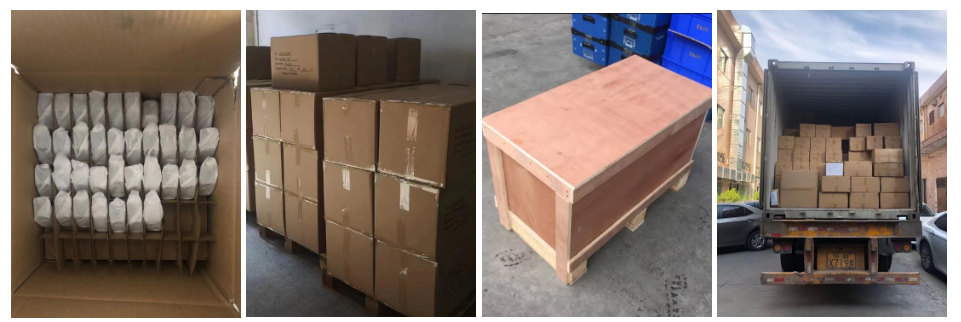
Bubble bag & Cardboard K=K Carton Box Pallet/ Wooden Box

FAQ
Hot Tags: zinc alloy die-cast decorative accessories, China zinc alloy die-cast decorative accessories manufacturers, suppliers, factory, Zinc Alloy Decorations, Zinc Alloy Bathroom Parts, zinc alloy die casting, Zinc Alloy Die Casting Handle, Zinc Alloy Die Cast Decorative Accessories


