


Powder Metallurgy
Powder metallurgy (PM) is a term covering a wide range of ways in which materials or components are made from metal powders. PM processes are sometimes used to reduce or eliminate the need for subtractive processes in manufacturing, lowering material losses and reducing the cost of the final product.This occurs especially often with small metal parts, like gears for small machines. Some porous products, allowing liquid or gas to permeate them, are produced in this way.They are also used when melting a material is impractical, due to it having a high melting point, or an alloy of two mutually insoluble materials, such as a mixture of copper and graphite.
In this way, powder metallurgy can be used to make unique materials impossible to get from melting or forming in other ways. A very important product of this type is tungsten carbide.Tungsten carbide is used to cut and form other metals and is made from tungsten carbide particles bonded with cobalt.Tungsten carbide is the largest and most important use of tungsten,consuming about 50% of the world supply. Other products include sintered filters, porous oil-impregnated bearings, electrical contacts and diamond tools.
Powder metallurgy techniques usually consist of the compression of a powder, and heating (sintering) it at a temperature below the melting point of the metal, to bind the particles together. Powder for the processes can be produced in a number of ways, including reducing metal compounds,electrolyzing metal-containing solutions,and mechanical crushing, as well as more complicated methods, including a variety of ways to fragment liquid metal into droplets, and condensation from metal vapor. Compaction is usually done with a die press, but can also be done with explosive shocks or placing a flexible container in a high-pressure gas or liquid. Sintering is usually done in a dedicated furnace, but can also be done in tandem with compression (hot isostatic compression), or with the use of electric currents.
Since the advent of industrial production-scale metal powder-based additive manufacturing in the 2010s, selective laser sintering and other metal additive manufacturing processes are a new category of commercially important powder metallurgy applications.
316 Stainless Steel Powder Metallurgy
Powder metallurgy (PM) is a versatile manufacturing process that involves the production of metal components from metal powders. One of the most widely used materials in this process is 316 stainless steel, known for its excellent corrosion resistance and mechanical properties. Below is an introduction to 316 stainless steel powder metallurgy.
What is 316 Stainless Steel?
316 stainless steel is an austenitic stainless steel alloy containing chromium, nickel, and molybdenum. The addition of molybdenum enhances its resistance to pitting and corrosion, especially in chloride-rich environments. This makes it a preferred material for applications in marine, chemical, and medical industries.
Powder Metallurgy Process For 316 Stainless Steel
The powder metallurgy process for 316 stainless steel involves several key steps:
Powder Production
The 316 stainless steel powder is typically produced through gas or water atomization, which results in fine, spherical particles with excellent flowability and packing density.
01
Blending and Mixing
The metal powder is blended with lubricants and other additives to improve its compressibility and sintering properties.
02
Compaction
The blended powder is compacted in a die under high pressure to form a "green" part, which has the desired shape but lacks strength.
03
Sintering
The green part is heated in a controlled atmosphere (usually hydrogen or vacuum) to temperatures below the melting point. This process bonds the particles together, resulting in a dense and strong final product.
04
Secondary Operations
Depending on the application, additional processes such as machining, heat treatment, or surface finishing may be applied to enhance the part's properties.
05
Advantages of 316 Stainless Steel Powder Metallurgy
High Corrosion Resistance
316 stainless steel PM parts retain the alloy's excellent corrosion resistance, making them suitable for harsh environments.
01
Complex Geometries
Powder metallurgy allows for the production of complex shapes with high precision, reducing the need for secondary machining.
02
Cost-Effectiveness
PM minimizes material waste and enables the production of near-net-shape components, lowering production costs.
03
Consistency and Reproducibility
The PM process ensures consistent material properties and part dimensions, making it ideal for mass production.
04
Applications of 316 Stainless Steel Powder Metallurgy
- Medical Devices: Surgical instruments, implants, and dental tools.
- Chemical Industry: Valves, pumps, and reactor components.
- Marine Equipment: Fasteners, fittings, and hardware exposed to saltwater.
- Food Processing: Equipment requiring hygienic and corrosion-resistant surfaces.
316 stainless steel powder metallurgy combines the superior properties of 316 stainless steel with the versatility of the PM process. It offers a cost-effective, efficient, and reliable method for producing high-performance components for a wide range of industries. As technology advances, the potential applications of 316 stainless steel PM continue to expand, making it a key material in modern manufacturing.
Material Available
Stainless Steel (304L/316L/310/17-4PJ/440C etc.)


Sintered Carbide (Fe2Ni/Fe4Ni/Fe8Ni/Fe50Ni/Fe80Ni etc. )


Application Industry


Product Description
|
Product |
Custom Gear Manufacture Sintered Miter Spur Gear Powder Metallurgy |
|
Surface Treatment |
Anodized different color, Mini polishing&brushing, Electronplating (zinc plated, nickel plated, chrome plated), Power coating&PVD coating, Laser marking&Silk screen, Printing, Welding, Harden etc. |
|
Material |
Metal: Stainless steel, Steel(Iron,)Brass,Copper,Aluminum Plastic: POM, Nylon, ABS, PP |
|
Drawing Format |
Pro/E, AutoCAD, SOLIDWORK,CAD, STP, IGES, etc. |
|
Precision Tolerance |
±0.01mm-±0.05mm |
|
Quality Control |
Strict quality assurance and inspection processes |
|
Machining Process |
Milling, turning, drilling, tapping and sheet metal fabrication Stamping die-casting,Multistep machining |
|
Production Volume |
Low to medium volume, prototype, and batch production |
|
Certificates |
ISO9001:2008,SGS |
Company Profile

The Business Scope
Company Scale: Founded in 2004, the total assets of 20 million RMB. Covers an area of about 10000 square meters, owns more than 150 employees. Annual turnover of about 50 million RMB;
Zinc, aluminum alloy die-casting mold development and production.
Zinc, aluminum alloy die casting parts;
CNC computer gongs, precision machining, CNC CNC machining center, drilling, tapping, punching machine, batch of feng, grinding and polishing machining, plastic injection and MIM.
Surface treatment (fully automatic dust-free workshop electrostatic spray, spray powder, sand blasting, vibration grinding, etc.
One-stop processing services!
The company has passed ISO9001:2008 quality system certification.
Test Equipment


Packing & Delivery
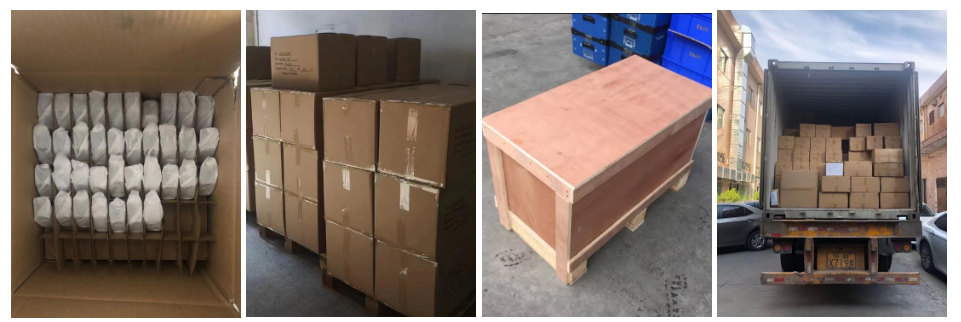
Bubble bag & Cardboard K=K Carton Box Pallet/ Wooden Box

FAQ
Hot Tags: 316 stainless steel powder metallurgy, China 316 stainless steel powder metallurgy manufacturers, suppliers, factory, 17 4 Stainless Steel Powder Metallurgy, 440 Stainless Steel Powder Metallurgy, 304 Stainless Steel Powder Metallurgy, stainless steel powder metallurgy, 316 Stainless Steel Powder Metallurgy


