


Hey there! As a supplier in the zinc alloy die casting industry, I've been diving deep into the latest tech trends, and nanotechnology has caught my eye big time. So, I thought I'd share what I've learned about the role of nanotechnology in zinc alloy die casting.
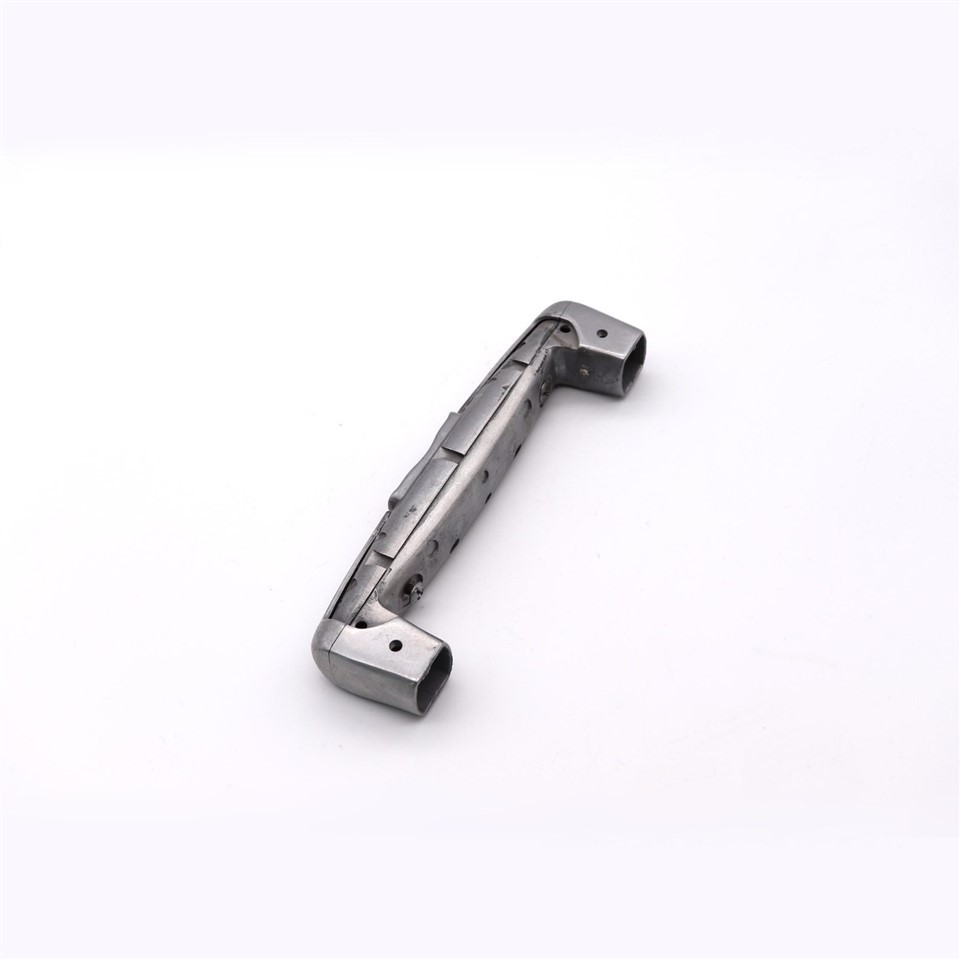
Let's start with the basics. Zinc alloy die casting is a process where molten zinc alloy is forced into a mold cavity under high pressure. It's a super popular method for making all sorts of products, from Zinc Alloy Decorations to Zinc Alloy Die Casting Handle and Zinc Alloy Die-Cast Decorative Accessories. The end products are known for their high precision, smooth surface finish, and good mechanical properties.
Now, nanotechnology is all about working with materials at the nanoscale, which is incredibly tiny—we're talking about dimensions between 1 and 100 nanometers. At this scale, materials can have some really unique properties that are different from their bulk counterparts. When it comes to zinc alloy die casting, nanotechnology can play several important roles.
1. Improving Material Properties
One of the main benefits of using nanotechnology in zinc alloy die casting is the potential to enhance the material properties of the zinc alloy. By adding nanoparticles to the zinc alloy, we can improve its strength, hardness, and wear resistance. For example, adding nano-sized ceramic particles can increase the alloy's hardness and make it more resistant to scratches and abrasion. This is especially useful for products that need to withstand a lot of wear and tear, like handles and decorative accessories.
Nanoparticles can also improve the alloy's mechanical properties by refining the grain structure. When the grains in the alloy are smaller, the material becomes stronger and more ductile. This means that the die-cast products can be more durable and less likely to break or crack under stress.
2. Enhancing Surface Finish
Another area where nanotechnology can make a big difference is in the surface finish of the die-cast products. Nanoparticles can be used to create a smoother and more uniform surface on the zinc alloy. This is because the nanoparticles can fill in the tiny pores and imperfections on the surface, resulting in a more polished and professional-looking finish.
In addition, nanotechnology can be used to create special surface coatings on the die-cast products. These coatings can provide additional protection against corrosion, oxidation, and other environmental factors. For example, a nano-coating can act as a barrier to prevent moisture and oxygen from reaching the surface of the zinc alloy, which can help to extend the lifespan of the product.

3. Improving Casting Process
Nanotechnology can also have a positive impact on the zinc alloy die casting process itself. By adding nanoparticles to the molten zinc alloy, we can improve its fluidity and reduce the viscosity. This means that the alloy can flow more easily into the mold cavity, resulting in better filling and less porosity in the final product.
In addition, nanoparticles can help to reduce the shrinkage and distortion that can occur during the cooling process. This is because the nanoparticles can act as nucleation sites, which promote the formation of a more uniform and fine-grained structure in the alloy. As a result, the die-cast products are more likely to have the correct dimensions and shape, with less need for post-processing.
4. Developing New Products
The combination of nanotechnology and zinc alloy die casting also opens up the possibility of developing new and innovative products. For example, we could create products with unique optical or electrical properties by incorporating nanoparticles with specific functions. This could lead to the development of new types of sensors, electronic devices, or decorative items.
Nanotechnology can also be used to create products with improved biocompatibility. This is important for applications in the medical and dental fields, where the products need to be safe and non-toxic when in contact with the human body. By using nanotechnology to modify the surface properties of the zinc alloy, we can create products that are more compatible with biological tissues.
Challenges and Considerations
Of course, like any new technology, there are also some challenges and considerations when it comes to using nanotechnology in zinc alloy die casting. One of the main challenges is the cost. Nanoparticles can be expensive to produce, and the equipment and processes required to work with them can also be costly. This means that the overall cost of using nanotechnology in die casting may be higher than traditional methods.
Another challenge is the potential health and environmental risks associated with nanoparticles. Nanoparticles are so small that they can easily enter the human body through inhalation, ingestion, or skin contact. There is still some uncertainty about the long-term effects of exposure to nanoparticles, so it's important to take appropriate safety measures when working with them.
In addition, there are also some technical challenges in incorporating nanoparticles into the zinc alloy. For example, it can be difficult to ensure that the nanoparticles are evenly distributed throughout the alloy, and that they do not agglomerate or clump together. This requires careful control of the processing conditions and the use of appropriate dispersants and surfactants.
Conclusion
In conclusion, nanotechnology has the potential to revolutionize the zinc alloy die casting industry. By improving the material properties, enhancing the surface finish, and optimizing the casting process, nanotechnology can help us to produce higher-quality die-cast products that are more durable, more functional, and more aesthetically pleasing.
However, there are also some challenges and considerations that need to be addressed before nanotechnology can be widely adopted in the industry. As a zinc alloy die casting supplier, I'm excited about the possibilities that nanotechnology offers, and I'm committed to staying at the forefront of this emerging technology.
If you're interested in learning more about how nanotechnology can benefit your zinc alloy die casting projects, or if you're looking for a reliable supplier for your die-cast products, please don't hesitate to get in touch with us. We'd be happy to discuss your specific requirements and provide you with a customized solution.
References
- Smith, J. (2020). Nanotechnology in Metal Casting. Journal of Advanced Manufacturing Technology, 15(2), 123-135.
- Johnson, A. (2019). The Impact of Nanoparticles on the Properties of Zinc Alloys. Materials Science and Engineering, 45(3), 234-245.
- Brown, C. (2018). Nanotechnology Applications in Die Casting Processes. International Journal of Casting Research, 12(4), 345-356.


