


Advantages of CNC Machining for Stainless Steel 17-4
Stainless Steel 17-4, also known as UNS S17400 or Grade 630, is a precipitation-hardening martensitic stainless steel widely used in industries such as aerospace, medical, and oil & gas. Its excellent combination of strength, corrosion resistance, and machinability makes it a popular choice for critical components. CNC machining, with its precision and efficiency, offers significant advantages when working with this material.
High Precision and Consistency
CNC machining is renowned for its ability to produce parts with tight tolerances and excellent dimensional accuracy. When machining Stainless Steel 17-4, CNC ensures that intricate designs and complex geometries are achieved with minimal errors. This is crucial for applications where precision is paramount, such as in aerospace or medical devices.
Enhanced Efficiency
CNC machines can operate continuously with minimal human intervention, significantly reducing production time. Automated tool changes, high-speed machining, and optimized tool paths further enhance efficiency, making CNC machining an ideal choice for high-volume production of Stainless Steel 17-4 components.
Superior Surface Finish
Stainless Steel 17-4 is known for its corrosion resistance and aesthetic appeal. CNC machining can achieve excellent surface finishes, reducing the need for additional polishing or finishing processes. This is particularly beneficial for applications where both functionality and appearance are important.
Flexibility in Design
CNC machining allows for the production of highly complex and customized parts. With CAD/CAM software integration, designers can create detailed models that are accurately translated into finished products. This flexibility is especially valuable when working with Stainless Steel 17-4, as it enables the creation of components tailored to specific industrial requirements.
Material Integrity Preservation
CNC machining minimizes material waste and avoids excessive heat generation, which can affect the mechanical properties of Stainless Steel 17-4. Proper tool selection and machining parameters ensure that the material retains its strength, hardness, and corrosion resistance.
Cost-Effectiveness for Medium to High Production
While CNC machining requires an initial investment in equipment and setup, it becomes highly cost-effective for medium to high production volumes. The ability to produce consistent, high-quality parts reduces the need for rework and lowers overall manufacturing costs.
In conclusion, CNC machining is a highly advantageous method for processing Stainless Steel 17-4. Its precision, efficiency, and flexibility make it an ideal choice for industries that demand high-performance components. By leveraging the benefits of CNC machining, manufacturers can fully utilize the exceptional properties of Stainless Steel 17-4 to meet even the most stringent application requirements.
CNC Processing Flow
Preparation before starting:
1. Each time the machine tool is turned on or reset by emergency stop, first return the machine tool to the reference zero position (i.e. return to zero) so that the machine tool has a reference position for its subsequent operations.
2. Clamping the workpiece.
3. Before clamping the workpiece, clean all surfaces first, and do not allow oil, iron and dust to stick to them, and use a file (or oilstone) to remove burrs on the surface of the workpiece.
4. The high-speed iron such as the clamping fixture must be ground by a grinder to make it smooth and flat. The code iron and nut must be strong and can reliably clamp the workpiece. For some small workpieces that are difficult to install, they can be clamped directly on the vise.
5. The machine tool workbench should be clean and free of iron filings, dust and oil.
6. When processing the lock plate, the shims are generally placed at the four corners of the workpiece. For workpieces with too large a span, shims of equal height must be placed in the middle to prevent deformation.
7. According to the size of the drawing, use a caliper to check whether the length, width and height of the workpiece are qualified.
8. When clamping the workpiece, according to the clamping and placement method in the programming work manual, it is necessary to consider avoiding the processing area and the situation where the tool head may hit the fixture during processing.
9. After the workpiece is placed on the shim, the workpiece reference surface must be drawn according to the requirements of the drawing. The error in the length direction of the workpiece is less than 0.02mm, and the horizontal error in the X and Y directions of the top surface is less than 0.05mm. For workpieces that have been ground on all six sides, check whether their verticality is qualified.
10. After the workpiece is drawn, the nut must be tightened to prevent the workpiece from shifting during processing due to loose clamping.
11. Pull the gauge again to make sure the error is within the tolerance after clamping.
12. Workpiece touch count: The clamped workpiece can be touched by a touch count head to determine the reference zero position of the machining. The touch count head can use three types of photoelectric and mechanical dial indicators. There are two methods of edge touch count, center touch count and single-side touch count.
The steps of center touch count are as follows:
Touch counting method: photoelectric type is stationary, mechanical type has a speed of 450~600rpm.
1. Photoelectric type: manually move the X axis of the worktable to make the touch head touch one side of the workpiece .When the touch head just touches the workpiece and the red light turns on, set the relative coordinate value of this point to zero; then manually move the x axis of the worktable to make the touch head touch the other side of the workpiece, and record the relative coordinates when the touch head just touches the workpiece.
2. Mechanical: Manually move the X-axis of the worktable according to the center touch number, so that the touch head touches one side of the workpiece. When the touch head and the workpiece are eccentric, set the relative coordinate value of this point to zero; then manually move the X-axis of the worktable so that the touch head touches the other side of the workpiece. When the touch head and the workpiece are eccentric, record the relative coordinates at this time.
3. Dial indicator: When the first two methods cannot be used for special workpieces, first fix the dial indicator at a point on the spindle, take this point as the center of the circle, and the dial indicator arm as the radius. Manually rotate the spindle and move the X-axis to a suitable position so that the dial indicator needle displays the same number on the left and right sides of the workpiece to obtain its center number.
A. Single-side touch number: Subtract the diameter of the touch head (i.e. the length of the workpiece) from its relative value to check whether the length of the workpiece meets the requirements of the drawing.
b. Center of four sides: Divide this relative coordinate number by 2, the value obtained is the middle value of the workpiece x-axis. Then move the worktable to the middle value on the x-axis, set the relative coordinate value of the x-axis of this point to zero. This point is the zero position on the x-axis of the workpiece.
13. Carefully record the mechanical coordinate value of the zero position on the workpiece x-axis in one of G54~G59, and let the machine tool determine the zero position on the workpiece x-axis. Carefully check the correctness of the data again under MDI.
14. The steps for setting the zero position of the workpiece Y axis are the same as those for the X axis.
15. Prepare all tools according to the programming work manual.
16. According to the tool data in the programming work manual, replace the tool to be processed and set the value of the tool Z axis. There are two types: automatic tool filling and manual tool filling.
Our Office And Workshop

About US
BSH was established in 2015. Our company located in Songgang Town, Baoan district, Shenzhen, China.We are mold designer,provide additional services ( CNC machining, MIM ,Injection,die casting ,polishing, deburring, sanding, drilling, tapping and so on ) To meet our customer's specifications. We also supply all kinds of surface treatment(painting, anodizing, power coating ,sand blast, chrome plating etc.). Now the factory is with 5000 square meter, company total assets is 15 million RMB ,and a staff of nearly 150 members and workers, among which there are 12 engineers and over 50 senior technicians, who can make 3D designing and technical drawings with CAD/ CAM/ CAE according to our customers' requirements , and use CNC Processing Center, EDM center, 3-coordinate measurer, NC imitating milling machine, large precision EDM, high-speed milling machines, spot machine, wiring machine and so on.
Recommend Products

Test Equipment


Packing & Delivery
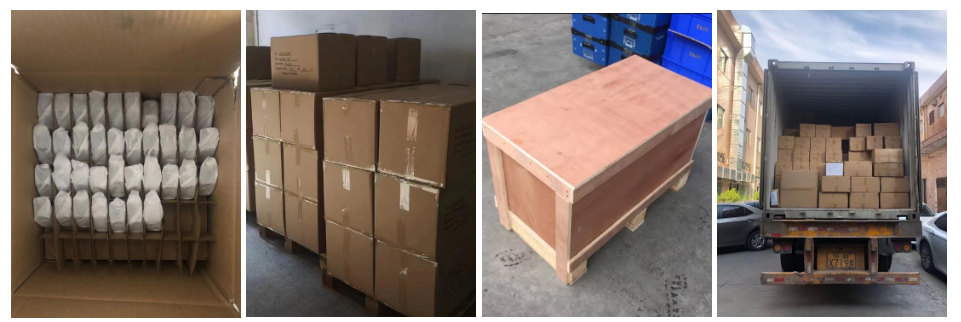
Bubble bag & Cardboard K=K Carton Box Pallet/ Wooden Box

FAQ
Hot Tags: 17-4 stainless steel CNC mill, China 17-4 stainless steel CNC mill manufacturers, suppliers, factory, 17 4 Stainless Steel CNC Mill, stainless steel cnc, 316 Stainless Steel CNC Mill, 304 Stainless Steel CNC Mill, 440 Stainless Steel CNC Mill


