


Powder Metallurgy Processing Flow
Powder Metallurgy (PM) is an advanced manufacturing technology that manufactures parts and materials by molding and sintering metal powders. Its processing flow mainly includes the following steps:
1. Raw material selection and preparation
The first step of powder metallurgy is to select suitable metal or alloy powders. Common metal powders include iron, copper, aluminum, nickel and their alloys. The particle size, shape and distribution of the powder have an important influence on the performance of the final product. The raw materials need to be finely processed to obtain uniform powder.
2. Mixing and additives
In order to improve the fluidity and molding properties of the powder, different types of powders are usually mixed and lubricants or adhesives are added. This step ensures that the powder can be evenly distributed and formed into the desired shape during the subsequent molding process.
3. Molding
The mixed powder is loaded into a mold and compacted to form a "green body" with a certain strength and shape. Common molding methods include uniaxial pressing, isostatic pressing and injection molding. The pressure, mold design and powder properties of the molding process have an important influence on the density and dimensional accuracy of the green body.
4. Sintering
The green body after molding needs to be sintered at high temperature (Sintering). During the sintering process, the powder particles diffuse and combine to form a dense metal structure. The control of sintering temperature and time is crucial to the mechanical properties and microstructure of the final product.
5. Post-processing
The sintered parts usually need to be post-processed to improve their performance and accuracy. Common post-processing methods include heat treatment, surface treatment (such as electroplating, chemical treatment), machining (such as milling, grinding) and impregnation (such as oil or resin impregnation).
6. Quality Inspection
In every link of powder metallurgy production, strict quality inspection must be carried out to ensure that the dimensional accuracy, mechanical properties and surface quality of the product meet the requirements. Commonly used inspection methods include metallographic analysis, hardness testing, density measurement and non-destructive testing.
7. Packaging and Delivery
Qualified products that pass quality inspection will be properly packaged to prevent damage during transportation and storage. Packaging materials and methods are selected according to the characteristics of the product and customer needs to ensure safe delivery of the product.
The powder metallurgy process is widely used in the automotive, aerospace, electronics and medical fields due to its advantages such as high efficiency, energy saving and high material utilization. By precisely controlling the parameters of each step, powder metallurgy can produce high-performance, complex-shaped metal parts to meet the diverse needs of modern industry.
Powder Metallurgy Strengthening Materials
Powder metallurgy materials composed of metal or alloy matrix phase and highly dispersed metal or non-metal phase that is basically insoluble in the matrix. Its main characteristics are high high temperature strength and good creep resistance. The strengthening mechanism is similar to precipitation strengthening. However, when precipitation-strengthened alloys are heated above the precipitation phase generation temperature, the precipitation phase will coarsen and re-dissolve, so the use temperature is limited.
For dispersion-strengthened alloys, the dispersed phase can be stabilized to the matrix solidus temperature. The presence of dispersed particles changes the yield strength, work hardening, creep and fracture behavior of the alloy. High temperature strength, especially creep rate, is affected by the geometric parameters of the dispersed phase (i.e., the spacing between particles in the matrix, the diameter of the particles, and the shape (aspect ratio)).
Its mechanism is affected by both dislocation bypassing the second phase and grain boundary sliding. There is no generally accepted creep model. The general principles for the selection of dispersed phases are: high generation free energy, high melting point, immiscible with the matrix, low phase boundary energy (i.e., good interface bonding), etc. The dispersed phase is usually an oxide, but can also be a stable intermetallic compound or even a pure metal.
Typical Materials For Powder Metallurgy
Sintered Aluminum Powder
Made by surface oxidation method. SAP has high high temperature strength and creep resistance, and its service temperature reaches 500℃, which is much better than general aluminum alloy. It is mainly used for: nuclear fuel cladding in reactors, aircraft wings and fuselages, compressor impellers, high temperature pistons, etc.
Copper
The dispersed particles are generally Al2O3, which are usually manufactured by internal oxidation. After dispersion strengthening, the strength and hardness of copper are greatly improved, and the conductivity is not much reduced. It is often used as electrodes for resistance welding, filament leads for incandescent lamps, parts of electron tubes and other materials in the electronics industry.
The main manufacturing method of dispersion-strengthened materials is powder metallurgy.
High Temperature Alloys
The earliest dispersion-strengthened nickel-based alloy was ThO2 (2%) strengthened nickel (TD-Ni). It is generally made by coprecipitation. Other alloys made by wet method include Ni-Mo, Ni-Co, Ni-Cr-Al and other alloys strengthened by Th02. After the emergence of mechanical alloying, a series of nickel-based, iron-based and cobalt-based alloys were developed. More than 10 types have been used. The dispersed phase is generally ThO2 and Y203. Several typical alloys are listed in the table.
The properties of MA754 are better than ThO2-Ni-Cr and have been successfully used as jet engine blades. MA956E is a Fe-Cr-Al-based material with excellent oxidation resistance and corrosion resistance. MA6000E alloy, the 1000h fracture stress is above 800OC, which is much better than TD-Ni and IN792.
At 1100℃, the 1000h fracture stress of TD-Ni and IN792 is only 20-30MPa, while MA6000E still has 160MPa. Therefore, MA6000E is a good blade material.
Others
For example: dispersion-strengthened lead (DS-Pb), which is the only example similar to SAP, with PbO as the dispersed phase, mainly used for sound attenuation, chemical equipment, radiation shielding and batteries; magnesium alloys containing aluminum and zirconium (aluminum and zirconium are both soluble in magnesium, but after dissolution, A1Zr4 dispersed phase is precipitated); Al-Fe alloys strengthened by intermetallic compounds FeAl3 and FeNiAl9, etc.
|
Material |
|
|
Stainless Steel |
SS201,SS301,SS303, SS304, SS316, SS416 etc. |
|
Steel |
Mild steel, Carbon steel, 4140, 4340, Q235, Q345B, 20#, 45# etc. |
|
Brass |
C35600, C36000, C37700, C37000, C37100, C28000, C26000, C24000, C22000, etc. |
|
Copper |
C11000,C12000,C12000, C36000 etc. |
|
Aluminum |
AL6061, Al6063, AL6082, AL7075, AL5052, A380 etc. |
|
Iron |
A36, 45#, 1213, 12L14, 1215 etc. |
|
Plastic |
ABS, PC, PE, POM, Nylon, PP, Peek etc. |
|
Surface Treatment Available for Different Materials |
|
|
Stainless Steel |
Brushed and Polishing, Passivating, Sandblasting, Laser engraving |
|
Steel |
Zinc plating, Oxide black, Nickel plating, Chrome plating, Carburized, Powder coated |
|
Aluminum parts |
Clear anodized, Color anodized, Sandblast anodized, Chemical film,Brushing,Polishing |
|
Titanium |
Sandblasting,Brushing, Polishing, Plating, Passivating |
Application


Company Profile
BSH was established in 2015. Our company located in Songgang Town, Baoan district, Shenzhen, China.We are mold designer,provide additional services ( CNC machining, MIM ,Injection,die casting ,polishing, deburring, sanding, drilling, tapping and so on ) To meet our customer's specifications. We also supply all kinds of surface treatment(painting, anodizing, power coating ,sand blast, chrome plating etc.). Now the factory is with 5000 square meter, company total assets is 15 million RMB ,and a staff of nearly 150 members and workers, among which there are 12 engineers and over 50 senior technicians, who can make 3D designing and technical drawings with CAD/ CAM/ CAE according to our customers' requirements , and use CNC Processing Center, EDM center, 3-coordinate measurer, NC imitating milling machine, large precision EDM, high-speed milling machines, spot machine, wiring machine and so on.

Test Equipment


Packing & Delivery
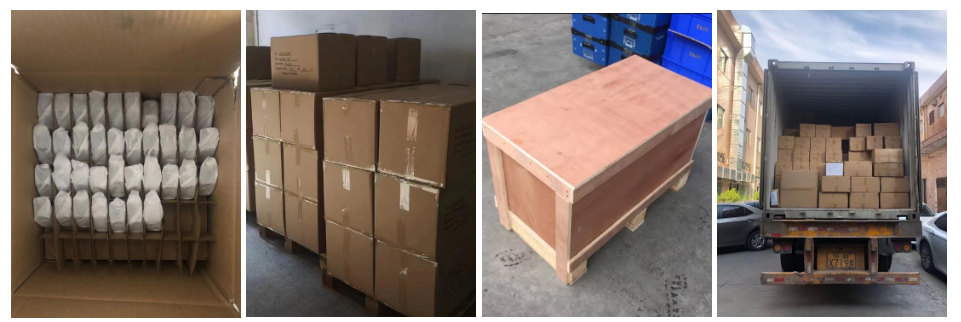
Bubble bag & Cardboard K=K Carton Box Pallet/ Wooden Box

Hot Tags: powder metallurgy processing flow, China powder metallurgy processing flow manufacturers, suppliers, factory, Advantages Of Powder Metallurgy Process, Powder Metallurgy Processing Flow, Powder Metallurgy Material Application, Powder Micro Injection Molding Technology, Powder Metal Forging, Metal Powder Metallurgy


