


Powder Micro-Injection Molding Technology
A new type of forming technology for parts formed by combining traditional powder metallurgy technology with modern plastic injection molding process
Powder injection molding is a new type of forming technology for parts formed by combining traditional powder metallurgy technology with modern plastic injection molding technology.
The biggest feature of this technology is that it can directly manufacture parts with the final shape, minimize the amount of machining and save raw materials, and solve the problem of difficult forming of complex-shaped products that has been plaguing the powder metallurgy field for many years; and the material adaptability of this technology is wide, and all metals, alloys, ceramics, etc. that can be made into powder can be made into parts using this technology. In addition, this technology can also achieve fully automated continuous production, with high production efficiency, excellent material performance, and high product dimensional accuracy, so it has received widespread attention.
Basic Process
The basic process of this technology is: first, the solid powder is uniformly mixed with a certain polymer and additive components, and after granulation, the granular material is injected into the mold cavity by an injection molding machine in a heated state for condensation and forming, and then the binder in the molded blank is removed by chemical or thermal decomposition methods, and finally the final product is obtained by sintering and densification.
In recent years, microsystem technology has developed rapidly in various fields, and at the same time, it has also put forward higher requirements for the manufacture of three-dimensional micro-complex components used in micro-engineering. It is hoped that micro-devices can achieve large-scale production while meeting the performance requirements of use. The main components in the microsystem include micro-molds, micro-mechanical structures for sensors and accelerators, biosensors, micro-fluidic elements, micro-reactors, etc. These components are complex in shape and small in size. The existing micro-machining technologies such as micro-cutting, laser cutting, silicon etching technology, etc. have low production efficiency and cannot be carried out in large-scale production. In recent years, the powder micro-injection molding process developed on the basis of powder injection molding provides the most potential preparation technology for realizing large-scale production of micro-components.
Commonly Used Materials in Powder Metallurgy
Powder metallurgy (PM) is a manufacturing process that involves the production of metal powders and their consolidation into finished or semi-finished products. This technique is widely used in various industries due to its ability to produce complex shapes with high precision and minimal material waste. In this article, we will introduce some of the most commonly used materials in powder metallurgy.
1. Iron and Steel Powders
Iron and steel powders are the most widely used materials in powder metallurgy. They are cost-effective and provide excellent mechanical properties, making them ideal for a wide range of applications, including automotive parts, bearings, and structural components. Iron powders are often alloyed with carbon, copper, or nickel to enhance their strength and wear resistance.
2. Copper and Copper Alloys
Copper powders and copper-based alloys are valued for their excellent electrical and thermal conductivity. These materials are commonly used in electrical contacts, heat exchangers, and bushings. Copper alloys, such as bronze and brass, are also popular in PM due to their corrosion resistance and aesthetic appeal.
3. Aluminum and Aluminum Alloys
Aluminum powders are lightweight and offer good corrosion resistance, making them suitable for aerospace, automotive, and consumer electronics applications. Aluminum alloys, reinforced with silicon or magnesium, are often used in PM to improve strength and durability.
4. Titanium and Titanium Alloys
Titanium powders are known for their high strength-to-weight ratio and exceptional corrosion resistance. They are widely used in aerospace, medical implants, and chemical processing industries. Titanium alloys, such as Ti-6Al-4V, are particularly popular due to their excellent mechanical properties and biocompatibility.
5. Nickel and Nickel Alloys
Nickel powders and nickel-based alloys are highly resistant to oxidation and heat, making them ideal for high-temperature applications, such as turbine blades and exhaust systems. Nickel alloys, such as Inconel, are also used in PM for their exceptional strength and corrosion resistance.
6. Tungsten and Tungsten Alloys
Tungsten powders are known for their high density, melting point, and hardness. They are commonly used in PM for applications such as radiation shielding, cutting tools, and aerospace components. Tungsten alloys, often combined with nickel or iron, are also widely used in heavy-duty applications.
7. Cobalt and Cobalt Alloys
Cobalt powders and cobalt-based alloys are valued for their wear resistance and high-temperature performance. They are commonly used in PM for cutting tools, dental implants, and jet engine components. Cobalt alloys, such as Stellite, are particularly popular for their hardness and corrosion resistance.
Development Direction
Powder micro-injection molding technology refers to a molding technology developed on the basis of traditional powder injection molding technology for parts with a size less than 1 micron. It is mainly used for the continuous manufacturing of parts with microstructured surfaces and microstructures. Its basic process steps are basically the same as those of traditional powder injection molding. The surface quality and porosity of the prepared parts can be controlled by selecting the original powder and appropriate sintering conditions. Unlike traditional powder injection molding, in order to facilitate the manufacture of microstructures, the average particle size of the selected powder for powder micro-injection molding is generally less than 1~2 microns; secondly, due to the increase in the specific surface area of the powder, a binder with low viscosity but sufficient strength is required to facilitate micro-injection molding and avoid damage to the green parts during demolding. In addition, in order to prevent deformation, cracks and bubbles, micro-injection molding technology has more stringent process conditions for degreasing and sintering.
Development Trend
At present, the main countries conducting research on this technology internationally are Germany, Japan, Singapore, the United States and the United Kingdom. Among them, Germany took the lead and achieved outstanding results. Beijing University of Science and Technology, Central South University and Dalian University of Technology in China have also conducted a series of research work in this field. For example, Beijing University of Science and Technology has developed a powder micro-injection molding mold with independent intellectual property rights suitable for traditional injection molding machines; and used carbonyl iron powder and iron-nickel alloy powder as raw materials to successfully realize powder micro-injection molding of micro gears with a tooth top circle diameter of less than 1 mm on traditional injection molding machines.
Powder metallurgy offers a versatile and efficient method for producing high-quality components from a wide range of materials. The choice of material depends on the specific application and the desired properties, such as strength, conductivity, or corrosion resistance. By understanding the characteristics of these commonly used materials, manufacturers can optimize their PM processes to meet the demands of various industries.
Application


Company Profile
BSH was established in 2015. Our company located in Songgang Town, Baoan district, Shenzhen, China.We are mold designer,provide additional services ( CNC machining, MIM ,Injection, die casting ,polishing, deburring, sanding, drilling, tapping and so on ) To meet our customer's specifications. We also supply all kinds of surface treatment(painting, anodizing, power coating, sand blast, chrome plating etc.). Now the factory is with 5000 square meter, company total assets is 15 million RMB ,and a staff of nearly 150 members and workers, among which there are 12 engineers and over 50 senior technicians, who can make 3D designing and technical drawings with CAD/ CAM/ CAE according to our customers' requirements , and use CNC Processing Center, EDM center, 3-coordinate measurer, NC imitating milling machine, large precision EDM, high-speed milling machines, spot machine, wiring machine and so on.

Test Equipment


Packing & Delivery
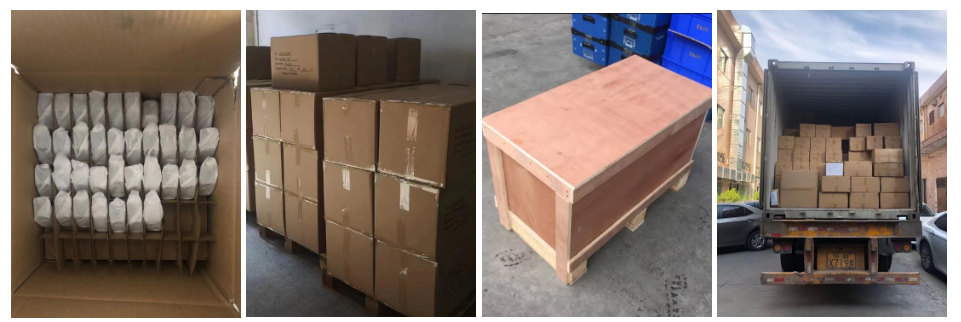
Bubble bag & Cardboard K=K Carton Box Pallet/ Wooden Box

Hot Tags: powder micro-injection molding technology, China powder micro-injection molding technology manufacturers, suppliers, factory, Powder Metal Forging, powder metallurgy, Powder Metallurgy Processing Flow, Metal Powder Metallurgy, Powder Metallurgy Material Application, titanium powder metallurgy


