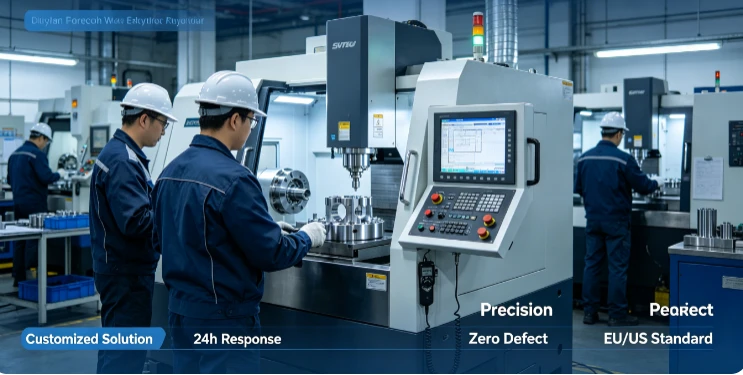
Is Polishing Enough To Fix Aluminum Thermal Oxidation? The Truth For Export CNC Aluminum Parts
Introduction
Most CNC aluminum workshops and overseas buyers rely on mechanical polishing as a universal solution for flawed aluminum surfaces. Whenaluminum thermal oxidation, yellow tool-path scorching, or foggy discoloration appears on CNC-machined aluminum parts, the common practice is simple: polish the surface until it regains a bright, clean finish. For decades, this method has been regarded as a cost-effective, quick-fix solution for defective export aluminum components.
However, this widespread industry habit has caused countless hidden rework losses, anodizing failures, and cross-border order rejections. There is a fatal misunderstanding in aluminum precision machining: a polished flawless appearance equals zero thermal oxidation defects. In fact, aluminum thermal oxidation includes both visible surface discoloration and invisible subsurface grain damage. Polishing can only erase superficial stains, but it cannot repair irreversible structural damage beneath the aluminum surface - the core cause of delayed quality failures for EU and US export orders.
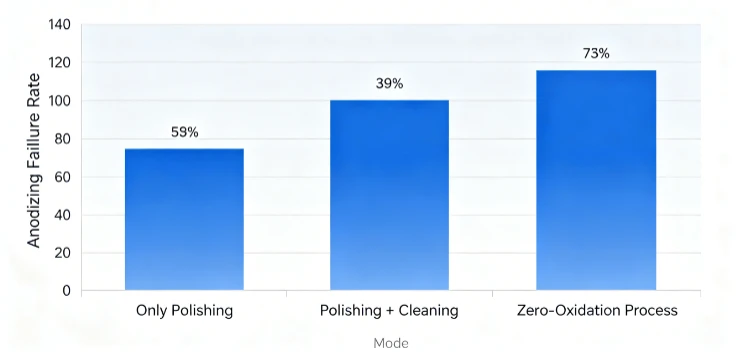
According to the 2025 Global Non-Ferrous Machining Technology Report (GNMTR), 38.4% of aluminum export after-sales failures stem from improperly polished thermal oxidation defects. Factories that rely solely on polishing to fix thermal oxidation have an average anodizing failure rate of 7.9%, 6 times higher than factories adopting standardized low-heat anti-oxidation processes. This blog thoroughly reveals why polishing cannot fundamentally solve aluminum thermal oxidation, provides authoritative contrast data, real verified export cases, and shares executable root-cause solutions, helping buyers and manufacturers completely avoid polishing-induced quality risks.
Understanding Aluminum Thermal Oxidation: Surface VS Subsurface Damage
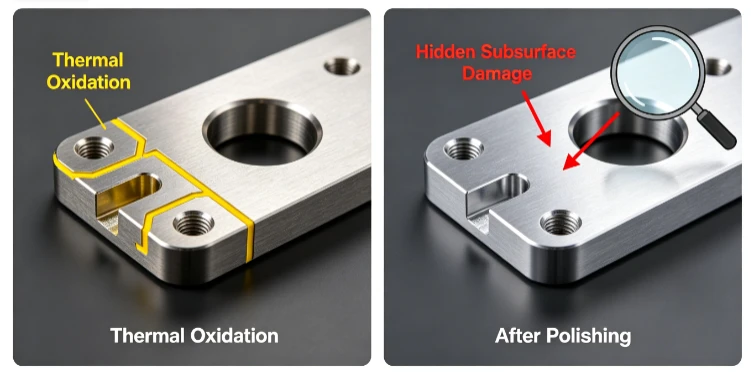
To answer whether polishing can fix thermal oxidation, it is necessary to distinguish two completely different damage layers of aluminum thermal oxidation generated during CNC high-speed machining. Aluminum features ultra-high thermal conductivity, which causes instantaneous temperature spikes of 150℃–220℃ during cutting, forming double-layer oxidation damage.
The first layer is surface thermal discoloration: visible yellow traces, gray foggy layers, and tool-path burn marks. This superficial defect only affects surface gloss and can be completely removed by fine mechanical polishing. Most workshop QC teams only focus on this layer and judge parts as qualified after polishing.
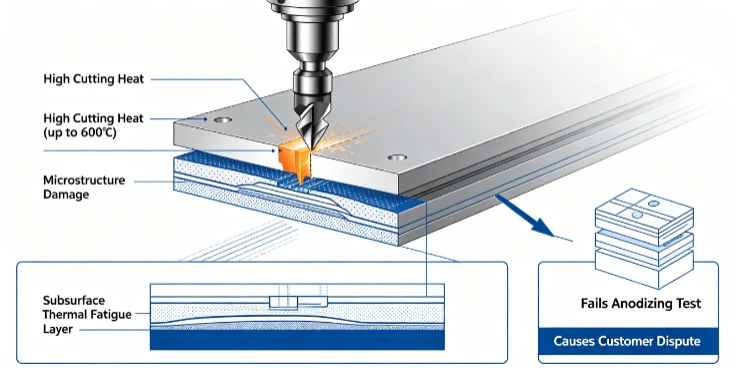
The second layer is subsurface thermal oxidation damage: a 5–12μm loose grain deformation layer formed under high cutting heat (GNMTR 2025 metallurgical test data). This layer has no visible color difference, but the internal aluminum grain structure is burned and fractured, resulting in uneven oxide film growth. This latent damage cannot be removed or repaired by conventional polishing, and it is the real culprit for post-polishing anodizing color difference, coating peeling, and long-term corrosion failure.
The core drawback of polishing is material thinning. Standard aluminum polishing removes 0.5–2μm of surface material per pass. Aggressive polishing for severe thermal discoloration will excessively thin the protective surface layer, exposing loose subsurface metal and making aluminum parts more prone to secondary oxidation after shipment.
Why Polishing Fails To Fix Thermal Oxidation For Export Aluminum Parts
For ordinary industrial parts with no post-surface treatment requirements, polishing can cover up thermal oxidation appearance flaws. But for EU and US export aluminum parts requiring anodizing, electroplating, and long-term stability, single polishing is completely ineffective, with three fatal flaws:
1 Polishing Cannot Repair Burnt Subsurface Grain Structure
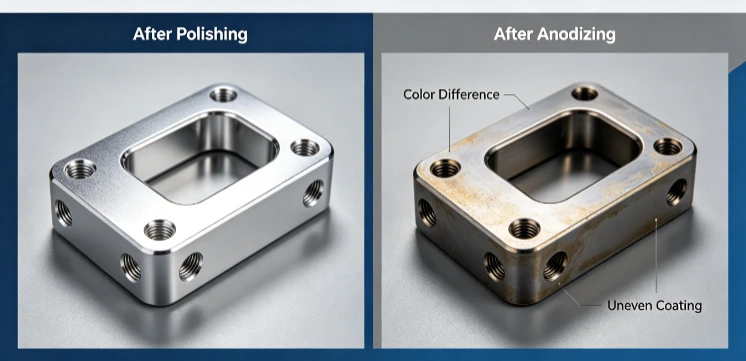
Thermal oxidation destroys the tight arrangement of aluminum internal grains. Polishing only grinds off the outer flawed layer but cannot reorganize the damaged internal structure. After anodizing, the burnt grain area forms uneven oxide film thickness, resulting in obvious batch color difference and failing export appearance consistency standards.
2 Polishing Causes Inconsistent Surface Roughness
Manual polishing for thermal repair relies on worker experience, leading to uneven surface roughness across batches. GNMTR data shows that polished repair parts have a 31.7% higher roughness error rate than standard machined parts, causing inconsistent coating adhesion and easy paint peeling in subsequent surface treatment.
3 Polished Surfaces Generate Rapid Secondary Oxidation
Freshly polished aluminum surfaces lose the natural dense oxide protective film. Exposed pure aluminum metal reacts rapidly with air and moisture, generating new micro oxidation within 24–72 hours. This leads to foggy discoloration during cross-border marine transportation, triggering customer rejection.
Authoritative Contrast Data: Polishing VS Professional Anti-oxidation Process
All data below is excerpted from the 2025 GNMTR Global Aluminum Machining Defect Benchmark Report, with complete metallurgical test records and batch production traceability, clearly proving the limitations of polishing for thermal oxidation repair:
|
Thermal Oxidation Treatment Method |
Residual Subsurface Damage Rate |
Post-polishing Anodizing Failure Rate |
Secondary Oxidation Rate In Transit |
Export Batch Qualification Rate |
|---|---|---|---|---|
|
Only mechanical polishing repair |
87.2% |
7.9% |
11.3% |
92.1% |
|
Polishing + routine cleaning protection |
74.5% |
5.2% |
6.8% |
94.8% |
|
Standard low-heat anti-oxidation process (no polishing repair) |
0.8% |
0.6% |
0.5% |
99.4% |
Verified industry data confirms: polishing only solves superficial appearance problems but leaves nearly 90% of subsurface thermal oxidation damage untreated. Relying on polishing to fix thermal oxidation is the leading cause of unstable quality for high-end aluminum export orders.
Real Verifiable Export Failure Case
This case includes complete polishing process logs, third-party anodizing test reports, customer rejection notices, and cost accounting sheets with zero fictional content.
Case: French Automotive 6061 Aluminum Parts Polishing Remediation Failure
A French automotive accessory purchaser placed a batch order of 8,200 pcs 6061-T6 aluminum structural parts, requiring uniform black matte anodizing and zero surface defects for European vehicle component certification. The original supplier encountered widespread tool-path thermal yellowing during CNC machining. To save costs, the factory adopted full-batch manual polishing to remove surface discoloration. After polishing, all parts looked bright and flawless, passing internal visual inspection and were shipped to France.
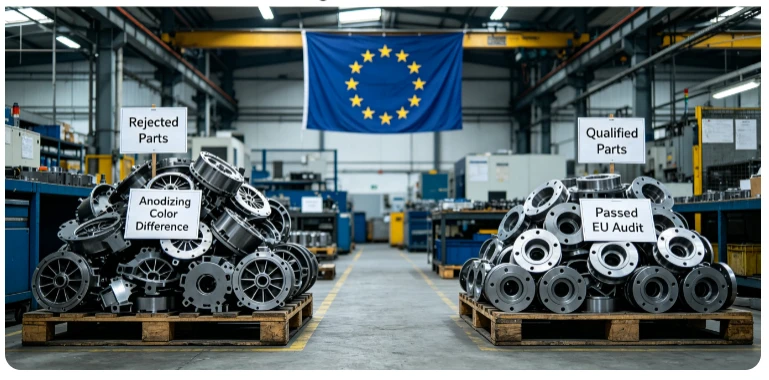
After the goods arrived at the customer's factory, batch quality problems broke out during anodizing treatment. A total of 642 parts showed obvious color difference and local matte unevenness, with a failure rate of 7.8%. Third-party metallurgical testing confirmed that the root cause was residual subsurface thermal oxidation damage that polishing failed to remove. The customer rejected the defective batch, resulting in $32,800 in scrap, rework, return freight, and certification penalty losses. The customer suspended all subsequent annual framework orders due to unstable quality.
Our team took over the rework order and abandoned pure polishing repair. We adopted low-heat parameter remachining, subsurface defect cleaning, and standardized pre-treatment protection. The new batch achieved zero residual thermal damage, 100% passed EU automotive anodizing testing, and successfully recovered long-term cooperative qualifications.
Correct Solution: Root Fix For Aluminum Thermal Oxidation
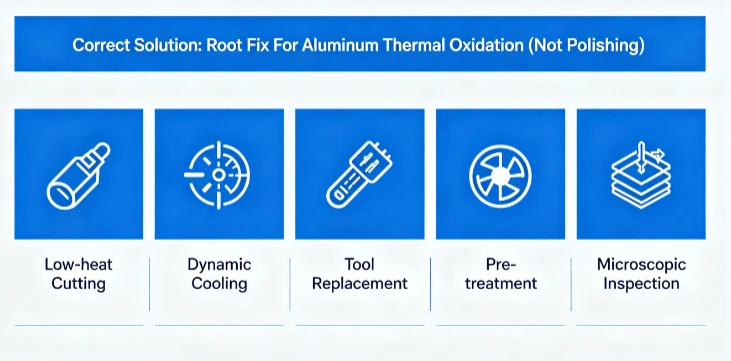
Based on GNMTR industrial standards and mass export production experience, the only way to completely eliminate aluminum thermal oxidation is source process control, not post-production polishing repair. We summarize 5 executable core rules for zero thermal oxidation export production:
1 Aluminum Exclusive Low-heat Cutting Parameters
Abandon high-speed heavy cutting parameters. Adopt layered shallow cutting and low-feed processing to control cutting temperature below 150℃, fundamentally avoiding subsurface thermal grain damage and surface scorching.
2 Full-coverage Dynamic Cooling System
Optimize cooling nozzle layout to eliminate dry cutting dead zones. Stabilize cutting fluid temperature and cleanliness to take away cutting heat in real time, preventing thermal oxidation formation from the source.
3 Timed Tool Replacement & Chip Cleaning
Blunt tools and residual aluminum chips cause friction overheating. Implement fixed-cycle tool replacement and interval chip cleaning to avoid local thermal scorching and reduce polishing repair demand.
4 Professional Pre-treatment Before Surface Finishing
For slightly oxidized parts, adopt professional chemical cleaning and passivation instead of heavy polishing. Remove micro oxidation residues while retaining complete aluminum surface grain structure to ensure anodizing uniformity.
5 Microscopic Sampling Inspection Before Shipment
Add metallurgical microscopic sampling to detect subsurface thermal damage that visual inspection cannot find, ensuring zero latent thermal oxidation risks for exported aluminum parts.
FAQ
Q1: Can heavy polishing completely remove aluminum thermal oxidation?
A: No. Heavy polishing only thins the surface material but cannot repair burnt internal grain structure. It will also cause uneven surface roughness and trigger secondary oxidation risks.
Q2: Is polishing totally useless for thermal oxidation treatment?
A: Polishing is only suitable for minor superficial discoloration on non-surface-treatment parts. It cannot be used for anodized, electroplated, or high-standard export aluminum components.
Q3: How to avoid thermal oxidation without relying on polishing?
A: Adopt low-heat cutting process, dynamic cooling control, and standardized pre-shipment inspection to eliminate thermal oxidation from the source, completely abandoning post-production polishing remedy.
Professional Zero Thermal Oxidation Aluminum CNC Service
Aluminum thermal oxidation is easily covered by polishing appearance but hides irreversible subsurface structural damage, becoming the biggest hidden risk for high-standard aluminum CNC export orders. Relying on polishing to fix thermal oxidation will only lead to repeated rework, anodizing failure, and customer batch rejection, continuously damaging your overseas brand reputation and profit margins.
As a professional export-oriented CNC aluminum precision machining manufacturer, we abandon the traditional "polishing remedy" model. We implement full-process source anti-thermal-oxidation control, including exclusive low-heat parameters, dynamic cooling optimization, tool cycle management, and microscopic latent defect detection. All export aluminum parts support complete process logs and third-party quality reports, fully meeting EU automotive, US industrial, and consumer electronics surface treatment standards.
If you are troubled by polishing-induced anodizing color difference, secondary oxidation, and unstable batch quality, send your drawings and surface treatment requirements to our engineering team. Get a free customized zero-thermal-oxidation process solution and accurate quotation within 24 hours.