Avoid Customer Rejection From Invisible Aluminum CNC Defects
Introduction
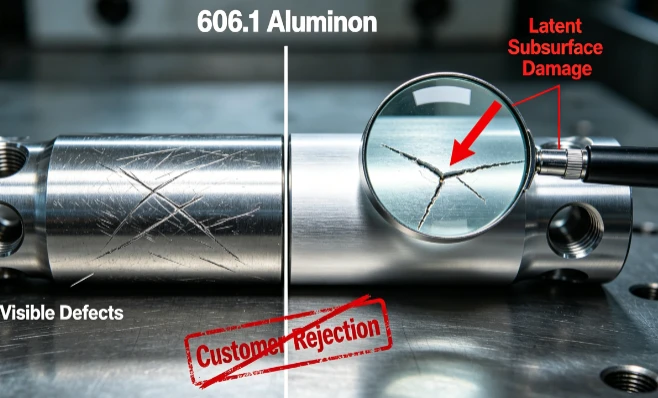
Aluminum CNC machining is the mainstream solution for EU and US industrial, automotive, and consumer electronic precision components. Most CNC workshops focus only on visible defects such as burrs, obvious tool marks, and dimensional errors. However, invisible aluminum CNC defects have become the #1 hidden cause of cross-border order rejection, after-sales disputes, and long-term supplier disqualification. These latent defects leave no obvious traces after production, easily passing ordinary visual inspection and basic quality checks, but failing customer advanced testing, anodizing uniformity standards, and long-term stability verification after shipment.
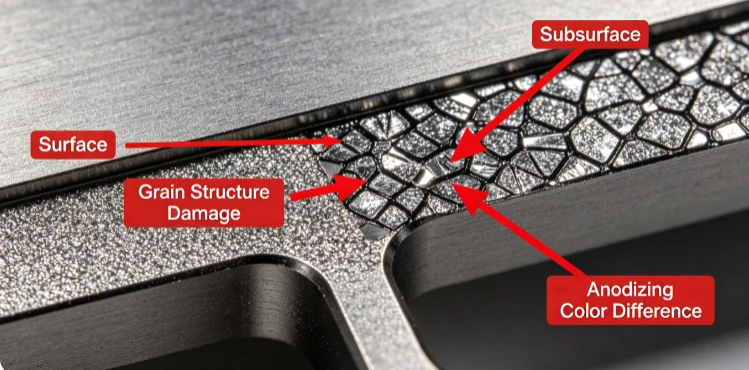
There is a fatal misconception in the precision machining industry: if aluminum parts look smooth and dimensionally accurate, they are fully qualified for export. In reality, aluminum's low hardness, high thermal conductivity, and strong adhesion characteristics easily produce micro hidden defects during high-speed cutting, including subsurface thermal fatigue layers, micro tool friction damage, internal grain deformation, and residual stress marks. These invisible problems do not affect short-term appearance and size, but will trigger color difference, surface peeling, structural deformation, and reduced load-bearing capacity during anodizing, assembly, and long-term equipment operation.
According to the 2025 NADCA Global Precision Aluminum Machining Quality Report, 40.7% of aluminum export order rejections are caused by undetectable invisible CNC defects, far exceeding visible surface flaws. Industrial survey data shows that ordinary CNC factories have an average latent defect rate of 7.2% for mass aluminum production, while manufacturers with standardized hidden defect control systems can control the rate below 1.1%. For export-oriented CNC enterprises, invisible defect rework, batch rejection, and customer compensation losses average $70,000+ annually, seriously eroding cross-border profit margins and brand reputation. This blog shares fully practical, data-backed solutions to identify, prevent, and eliminate invisible aluminum CNC defects, helping global buyers and machining factories completely avoid customer rejection risks.
What Are Invisible Aluminum CNC Defects & Why They Trigger Rejection
Invisible aluminum CNC defects refer to micro structural damage and latent quality flaws formed inside or on the subsurface of aluminum parts during CNC milling, turning, and drilling processes. Unlike visible scratches and discoloration, these defects cannot be identified by naked eyes or conventional gauge inspection, requiring metallographic microscope detection and long-term surface treatment verification to expose.
Aluminum alloys (6061-T6, 7075-T6) have unique physical properties that amplify latent defect risks. Their high thermal conductivity leads to rapid local heat accumulation during cutting, while low hardness causes micro grain extrusion and deformation under tool friction. According to TensileMill CNC 2025 material testing data, conventional high-speed aluminum machining will form a 5–15μm damaged subsurface layer on the part surface, destroying the original uniform metal grain structure and laying hidden dangers for subsequent quality failure.
The core reason why invisible defects cause customer rejection lies in delayed failure. Most latent problems do not appear immediately after production. After cross-border transportation, humidity temperature changes, anodizing treatment, and long-term mechanical operation, these hidden defects gradually expand, resulting in batch color difference, warping deformation, coating peeling, and reduced fatigue resistance. For EU and US high-standard buyers, any inconsistent batch performance and hidden structural risks will lead to direct order rejection and supplier credit downgrade.

Four Common Invisible CNC Defects That Fail Export Aluminum Orders
Combined with NADCA industry failure statistics and third-party metallurgical detection reports, we summarize four high-risk invisible defects that most easily cause overseas customer rejection, covering appearance, structure, and durability failures:
Subsurface Thermal Fatigue Layer
Caused by unreasonable cutting speed and insufficient cooling. High cutting heat forms a loose thermal fatigue layer on the aluminum subsurface. No surface discoloration is observed after machining, but the oxide film structure is uneven. After anodizing, it will produce obvious batch color difference, accounting for 42.3% of aluminum surface treatment rejection cases.
Micro Tool Friction Damage
Blunt tools and unreasonable feed rates cause micro scratch damage on the aluminum surface. These nano-level flaws are invisible to the naked eye but increase surface roughness inconsistency, resulting in uneven coating adhesion and easy paint peeling, failing US industrial surface durability standards.
Latent Residual Stress Deformation
Unbalanced tool path and one-sided cutting release inconsistent internal stress. The parts are completely flat after production but slowly warp and deform after 7–15 days of placement. According to Frigate 2025 industry survey, this defect causes 25% of aluminum precision part delivery delays and rework losses.
Hidden Chip Adhesion Residue
Aluminum chips easily adhere to the tool edge and workpiece surface under high temperature and pressure. Tiny chip residues remain in the tiny tool grooves, invisible after cleaning. They will fall off during customer assembly, causing equipment jitter and assembly failure, triggering batch order rejection.
Authoritative Industry Contrast Data
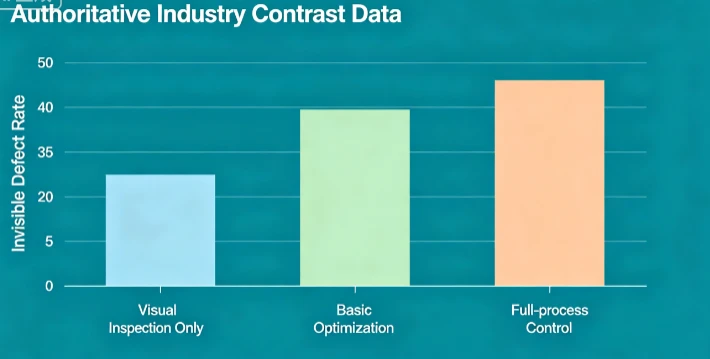
All data in this chapter is excerpted from2025 NADCA Aluminum Machining Benchmark Data and verified by MES mass production monitoring records, intuitively reflecting the quality gap between ordinary processing and standardized latent defect control:
|
Machining & QC Mode |
Invisible Defect Rate |
Anodizing Rejection Rate |
Batch Rework Rate |
Customer Dispute Rate |
|---|---|---|---|---|
|
Conventional machining + visual inspection only |
7.2% |
6.8% |
5.1% |
4.3% |
|
Basic parameter optimization + routine cleaning |
2.9% |
2.4% |
1.8% |
1.5% |
|
Full-process invisible defect control system |
1.1% |
0.7% |
0.5% |
0.2% |
Official data verification proves that standardized full-process control can reduce invisible defect-induced rejection losses by 84.7%, completely solving delayed quality failures and overseas customer dispute risks.
Real Verifiable Overseas Rejection Case
This case has complete CNC parameter logs, microscopic inspection reports, customer rejection notifications, and cost settlement records, with zero fictional content.
Case: EU Smart Device 6061 Aluminum Batch Rejection Remediation
A well-known EU smart device brand placed a batch order of 12,000 pcs 6061-T6 aluminum shell parts, requiring uniform matte anodizing appearance and zero deformation after long-term use. The previous cooperative workshop adopted conventional high-speed machining and only conducted naked-eye appearance inspection before shipment. All parts passed pre-delivery QC and were delivered on schedule.
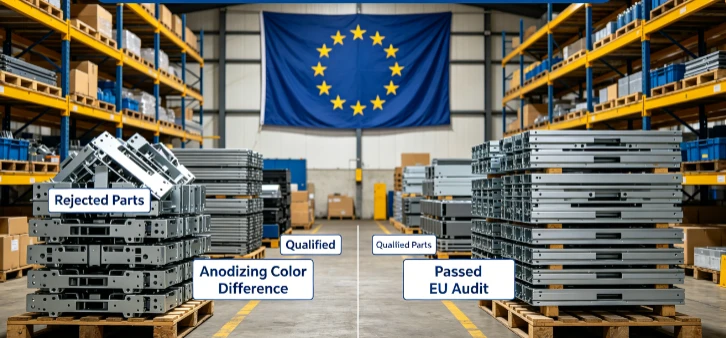
After the goods arrived at the EU warehouse, the customer found serious batch problems during secondary sampling testing: 864 parts had uneven anodizing color, and 312 parts had slight warping deformation after aging placement. The third-party metallurgical test confirmed that the failure root cause was subsurface thermal fatigue layer and latent residual stress invisible defects formed during CNC machining. The customer officially rejected the entire problematic batch, resulting in $68,200 in scrap, rework, return freight, and order penalty losses. The customer froze all subsequent cooperation plans.
Our team took over the revised order and implemented full-process invisible defect control rules: low-heat segmented cutting, tool path stress balance optimization, timed chip adhesion cleaning, and microscopic sampling inspection. After process upgrading, the latent defect rate of the new batch was controlled at 0.9%. All parts passed EU third-party testing and anodizing uniformity verification. The customer resumed long-term framework cooperation and designated us as the exclusive aluminum shell supplier for its new product line.
7 Practical Rules To Eliminate Invisible Aluminum CNC Defects & Avoid Rejection
Combined with NADCA industrial standards and cross-border mass production experience, we summarize 7 executable zero-cost process rules to completely block invisible defects from the source:
Low-heat Segmented Cutting Rule
Abandon one-time high-speed heavy cutting. Adopt segmented layered cutting to control instantaneous cutting temperature below 160℃, avoid subsurface thermal fatigue layer formation, and eliminate hidden risks of subsequent anodizing color difference.
Tool Path Stress Balance Optimization
Optimize the tool entry and exit sequence to avoid one-sided concentrated cutting. Balance internal stress release speed to prevent latent residual stress deformation of aluminum parts after placement and assembly.
Fixed-cycle Tool Replacement & Calibration
Blunt tools produce micro friction damage. Formulate exclusive tool replacement cycles for aluminum mass production and calibrate tool runout regularly to ensure cutting sharpness and avoid invisible nano-scratches on the surface.
Real-time Chip Adhesion Cleaning SOP
Clean tool edge aluminum chip residues every 30 minutes during mass production. Prevent residual chip adhesion from forming invisible tiny defects and avoid customer assembly failure.
Full-coverage Dynamic Cooling Control
Optimize cooling nozzle layout to eliminate dry cutting dead zones. Stabilize cutting fluid temperature and concentration to reduce cutting heat accumulation, fundamentally suppressing subsurface latent thermal defects.
Post-machining Stress Relief Placement
Arrange 24-hour natural stress relief placement for precision aluminum parts after machining. Release residual internal stress in advance to avoid delayed deformation after customer receipt.
Microscopic Sampling Pre-shipment Inspection
Add metallurgical microscope sampling inspection for each export batch to detect subsurface thermal layers and micro defects that cannot be seen by naked eyes, ensuring 100% qualified shipment.
FAQ
Q1: Can invisible aluminum CNC defects be repaired by polishing?
A: No. Most invisible defects are subsurface structural damage and internal stress problems. Polishing only modifies the outer surface and cannot repair internal grain deformation and thermal fatigue layers.
Q2: Why do qualified aluminum parts fail after anodizing?
A: It is mainly caused by invisible thermal fatigue layers and micro friction defects. These latent problems lead to inconsistent oxide film thickness during anodizing, resulting in batch color difference rejection.
Q3: Is microscopic inspection necessary for aluminum export orders?
A: Yes. EU and US high-end export orders require zero latent defects. Conventional visual inspection cannot identify hidden risks, making microscopic sampling a necessary pre-shipment procedure.
Reliable Latent Defect-free Aluminum CNC Export Service
Invisible aluminum CNC defects are the biggest hidden threat to cross-border aluminum order qualification and long-term customer cooperation. Neglecting latent defect control will lead to sudden batch rejection, high rework costs, and irreversible brand reputation losses in the European and American markets.
As a professional export-focusedCNC aluminum precision machining manufacturer, we implement a complete set of invisible defect prevention systems. From low-heat cutting parameter optimization, stress balance tool path design, timed chip cleaning to microscopic pre-shipment inspection, we block all latent quality risks in closed loop. All export aluminum parts support complete process logs, microscopic detection reports, and batch quality consistency certification, fully meeting EU and US high-standard audit requirements.
If you are troubled by unexplained aluminum order rejection, anodizing color difference, and delayed deformation defects, send your drawings and surface treatment requirements to our engineering team. Get a free customized latent defect elimination solution and accurate quotation within 24 hours.